Tenzo Product Discovery and Problem Ideation
Instant + Scheduled Order Assignment Engine
Instant meets Scheduled.
Zero conflicts, one expert pool.
The Background
A product assignment exercise solving Tenzo's core operational conflict: Instant (on-demand) and Scheduled (prepaid) orders compete for the same shared pool of home-service experts, with no system in place to prevent scheduled cancellations or wasted instant capacity.
The Challenge
Scheduled orders were locked in only minutes before their start time, leaving no recovery window, while instant orders were accepted with zero conflict-checking against upcoming slots.
Scheduled orders were locked in only minutes before their start time, leaving no recovery window, while instant orders were accepted with zero conflict-checking against upcoming slots. The result: an 18% cancellation rate, 84% on-time fulfillment, and just 52% instant acceptance — with no priority hierarchy, workload balancing, or escalation path.
The Solution
Designed a shared-pool assignment engine built around dynamic, location- and demand-aware protection windows, an 8-factor weighted expert scoring formula, conflict detection that offers a deferred ETA instead of a hard rejection, and a three-stage escalation flow (T-30 lock, T-20 ops alert, T-10 manual override). Backed by a full data model (Orders, Assignments, Experts, Escalation Events), five worked edge-case decision flows, and a competitive benchmark against Urban Company, Uber, Swiggy/Zomato, and Dunzo/Zepto.
- Dynamic, location- and demand-aware protection windows to prevent last-minute scheduled cancellations
- 8-factor weighted expert scoring formula (travel, scheduled risk, OTF impact, priority, workload, idle time, wait time, cancellation risk)
- Instant-vs-scheduled conflict detection with deferred-ETA offers instead of blank rejections
- Three-stage escalation flow: T-30 assign + lock, T-20 ops alert, T-10 manual override + customer call
- Full data model — Orders, Assignments, Experts, Escalation Events
- Competitive benchmarking across Urban Company, Uber, Swiggy/Zomato, and Dunzo/Zepto
- Customer and expert app wireframes plus a 6-panel ops metrics dashboard design
- 4-phase GTM rollout plan with shadow mode, phased zones, A/B tested instant logic, and a 1-hour rollback plan
The Outcome
A complete, defensible system design: priority logic, scoring formula, edge-case flows, 7 Given/When/Then acceptance criteria, customer/expert app wireframes, an ops metrics dashboard spec, and a 13-week phased GTM plan (shadow mode → single-zone → full rollout → optimization) with a 1-hour rollback path — targeting <5% cancellation, >95% OTF, and >80% instant acceptance within 90 days.
Tools Used
Gallery
Click any image to view full size
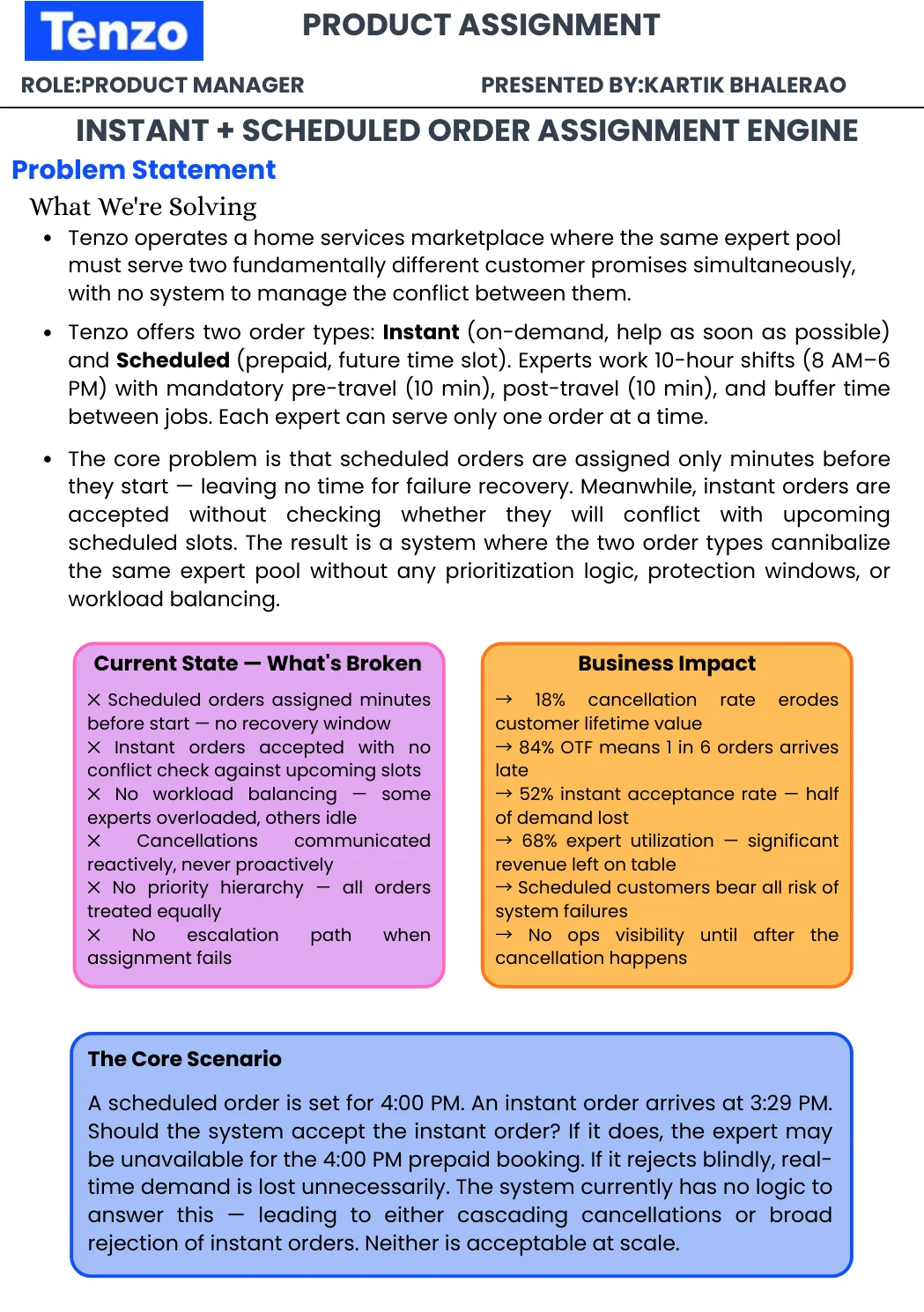
Problem Statement — Instant + Scheduled Order Assignment Engine, Current State & Business Impact
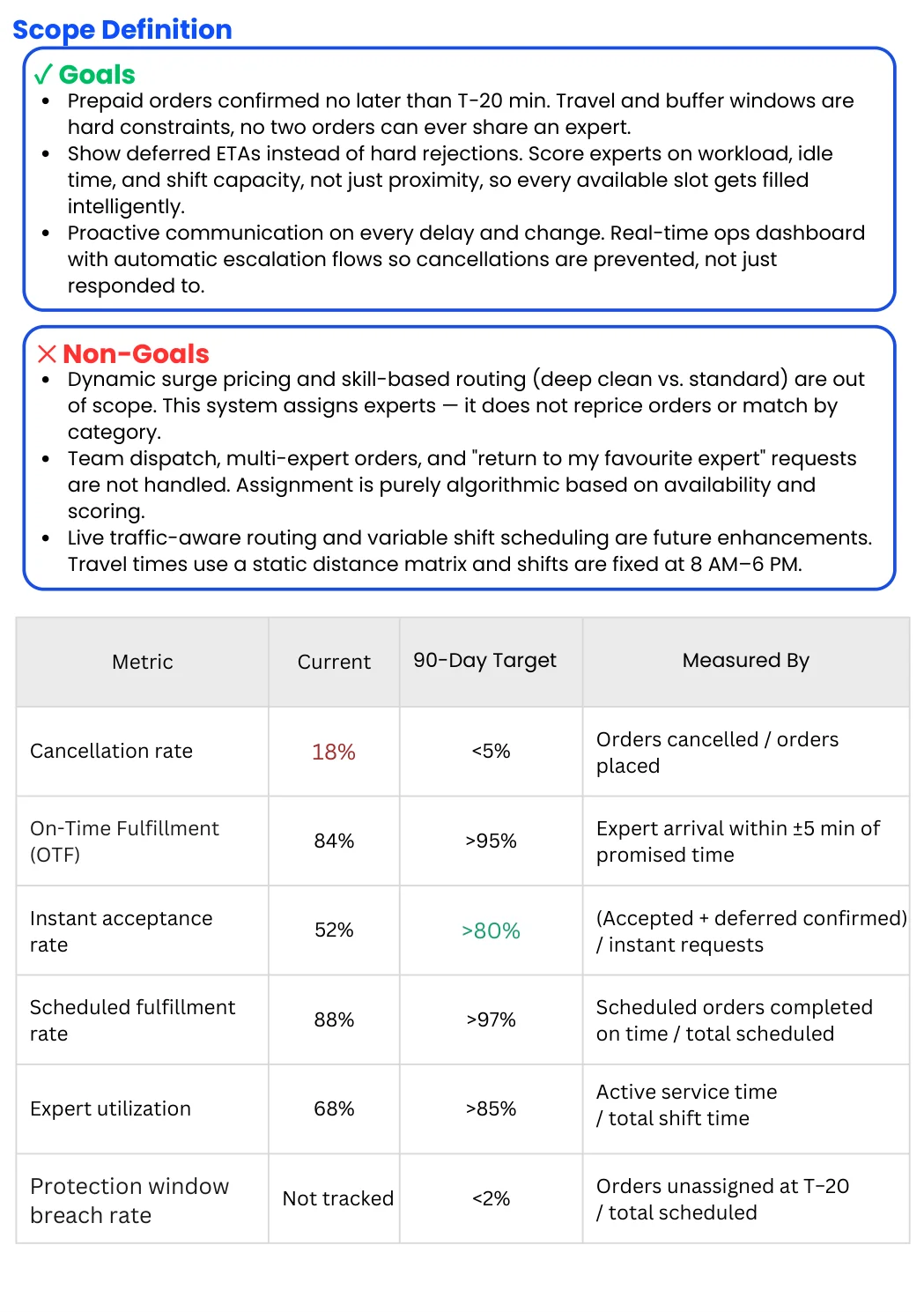
Success Metrics & 90-Day Targets, Scope Definition (Goals vs. Non-Goals)
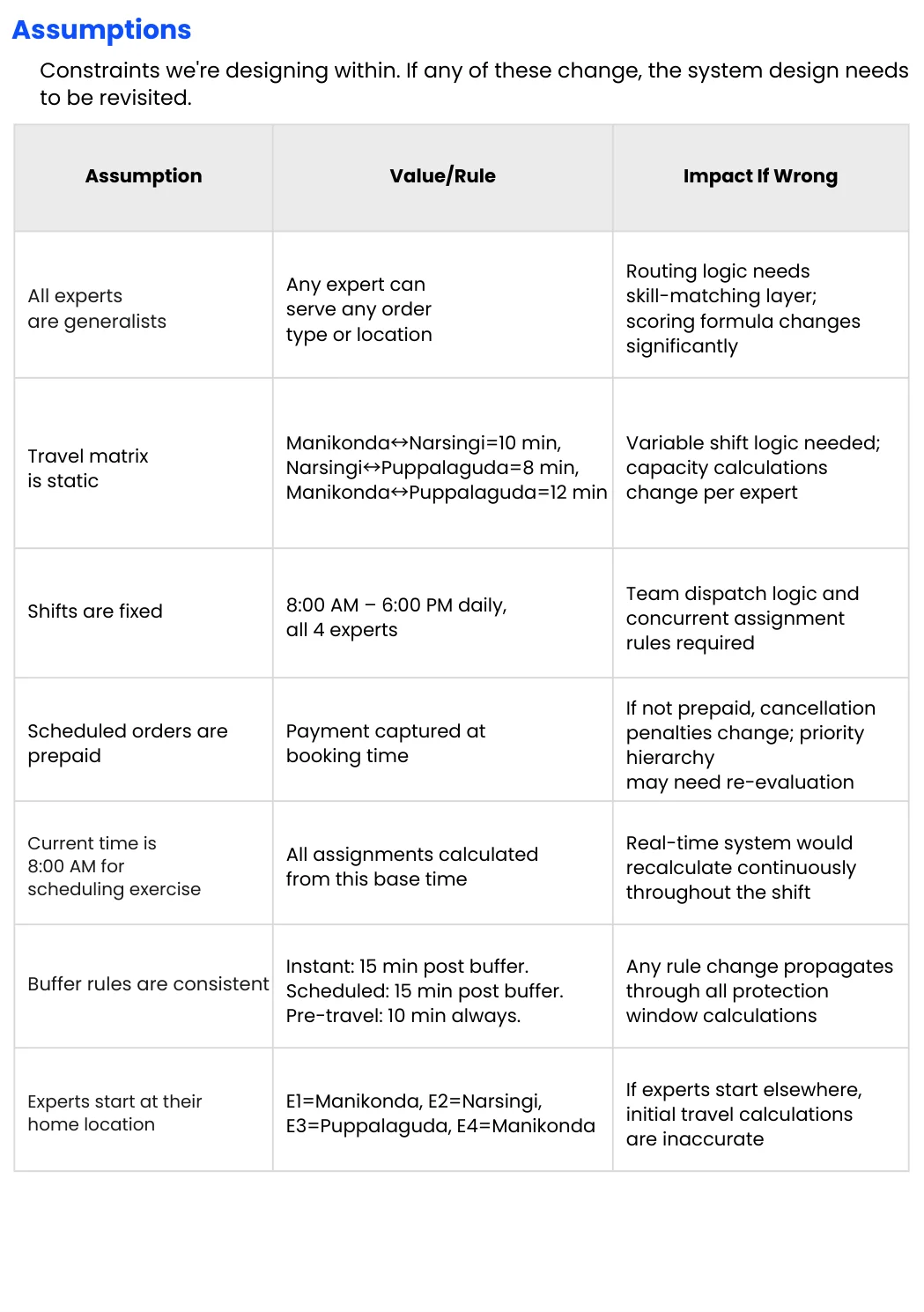
Assumptions — Constraints the System Design Is Built Within
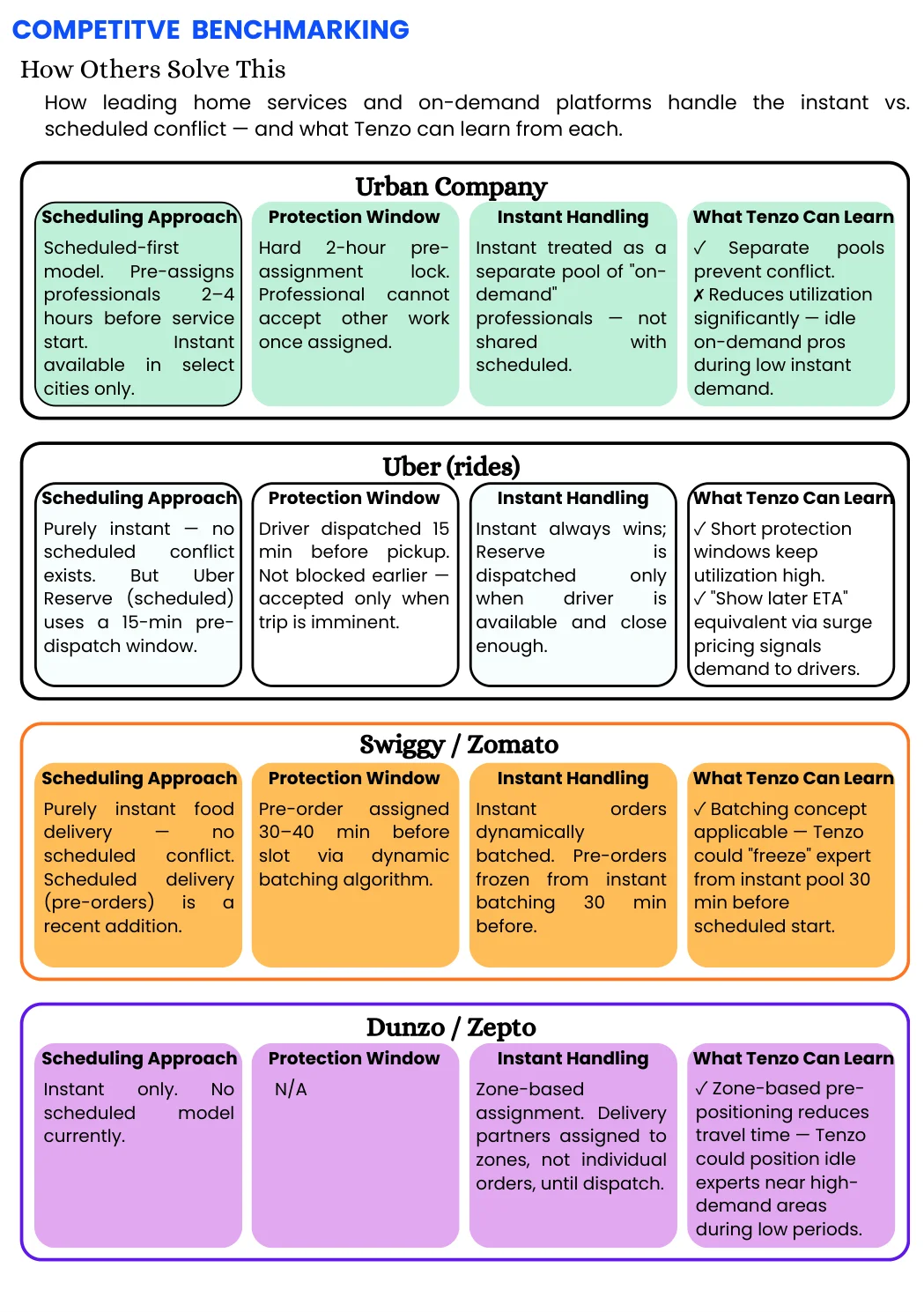
Competitive Benchmarking — Urban Company, Uber, Swiggy/Zomato, Dunzo/Zepto
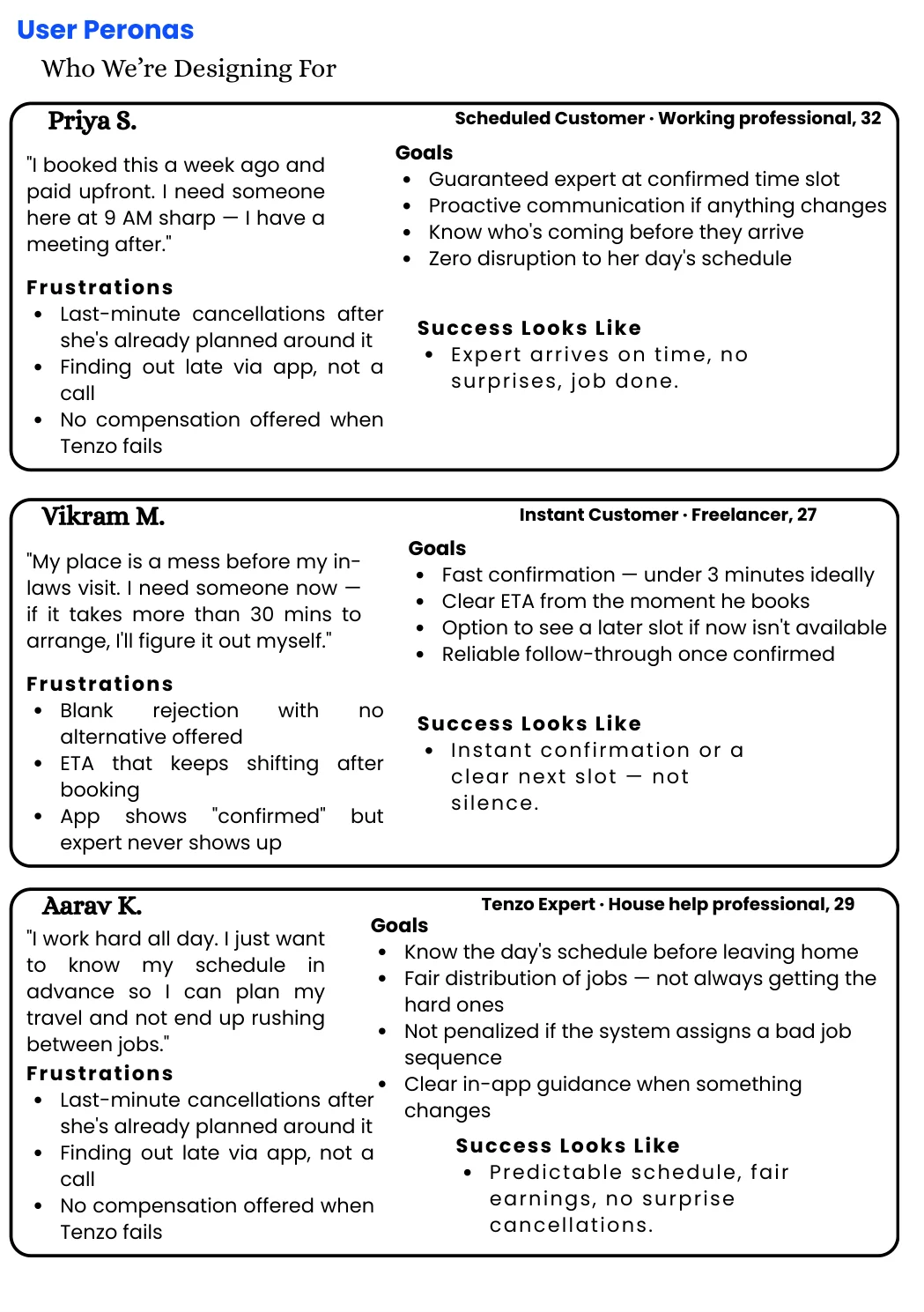
User Personas — Scheduled Customer, Instant Customer, Tenzo Expert
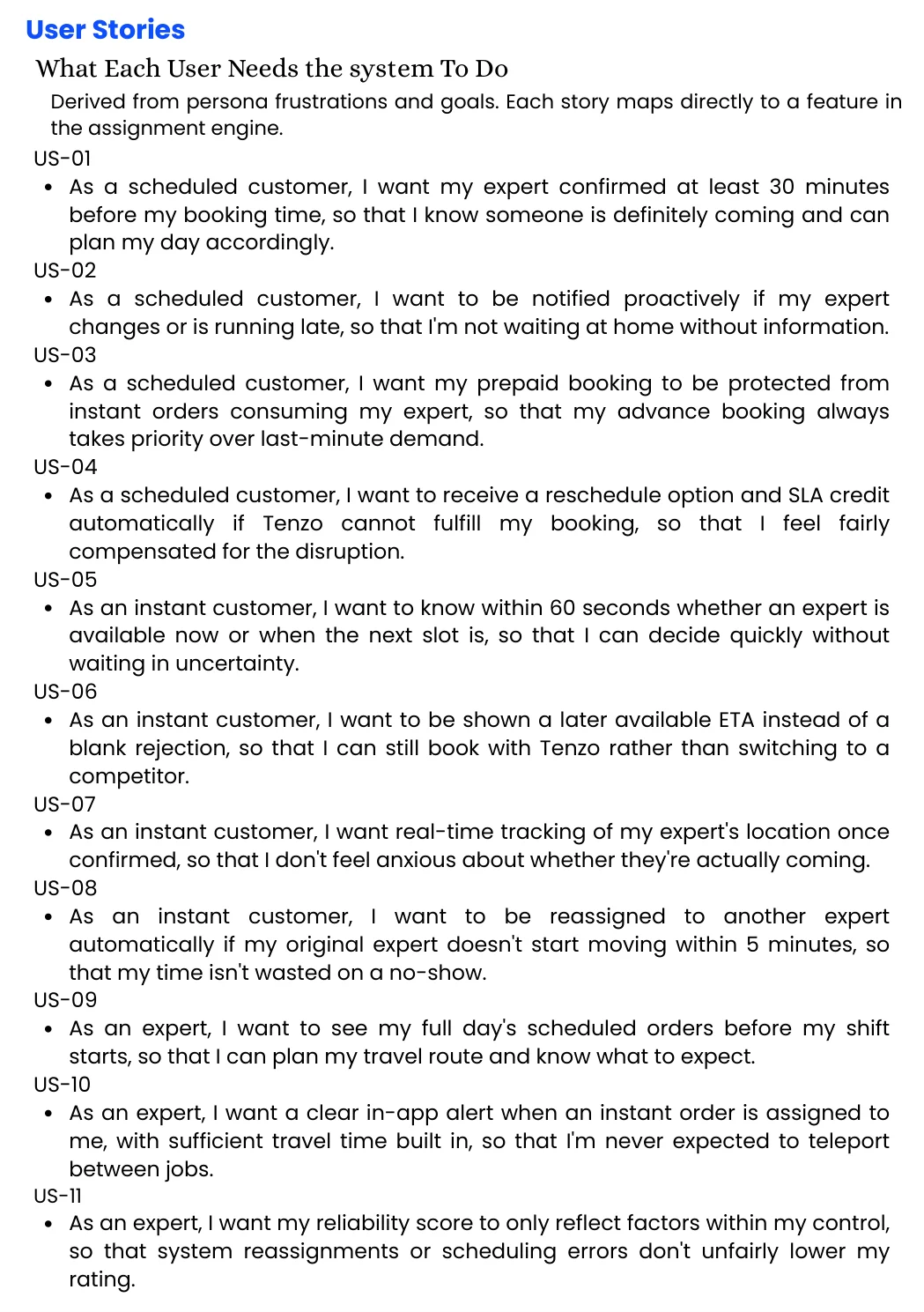
User Stories — Mapped from Persona Frustrations to Engine Features
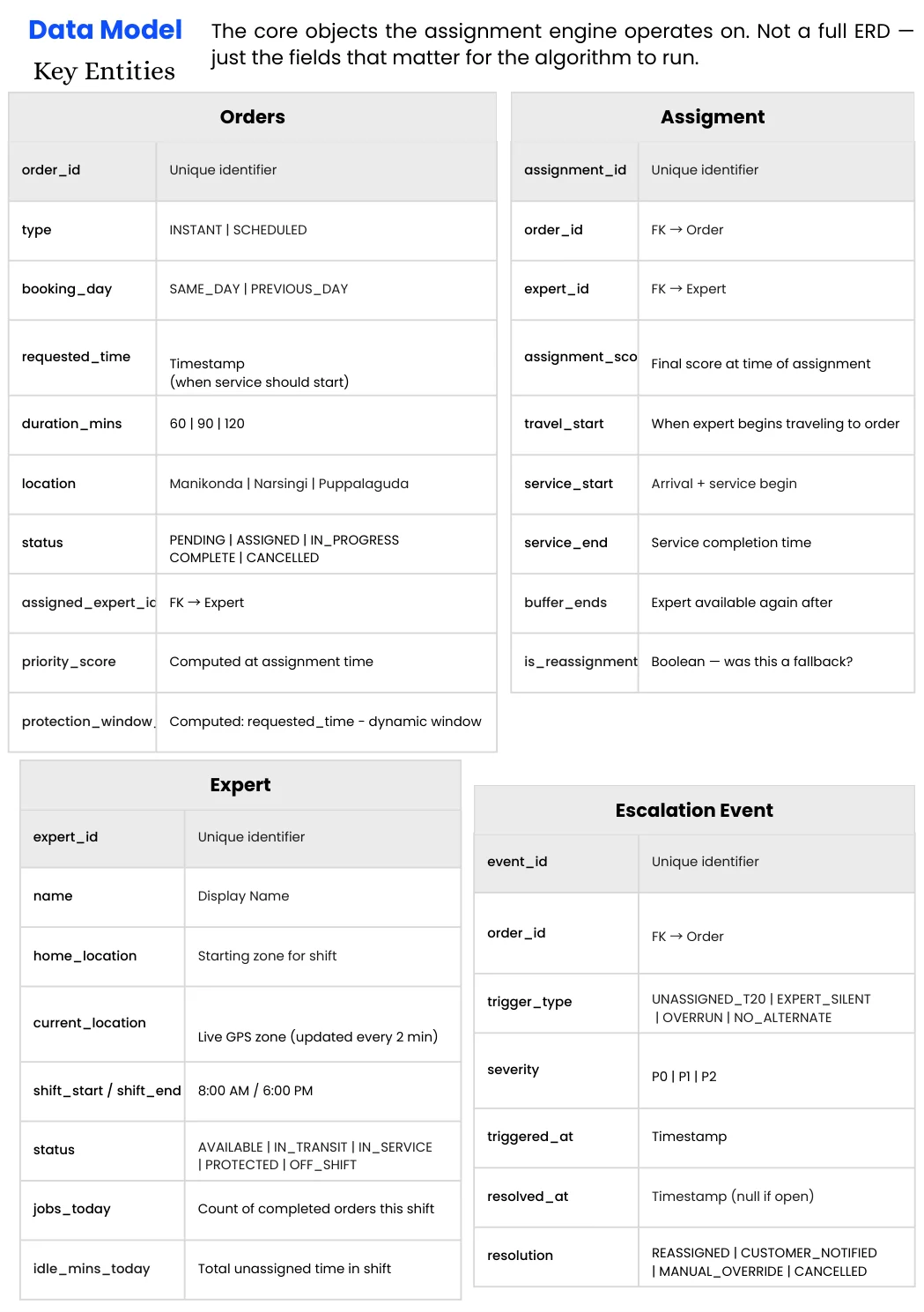
Data Model — Orders, Assignment, Expert, and Escalation Event Entities
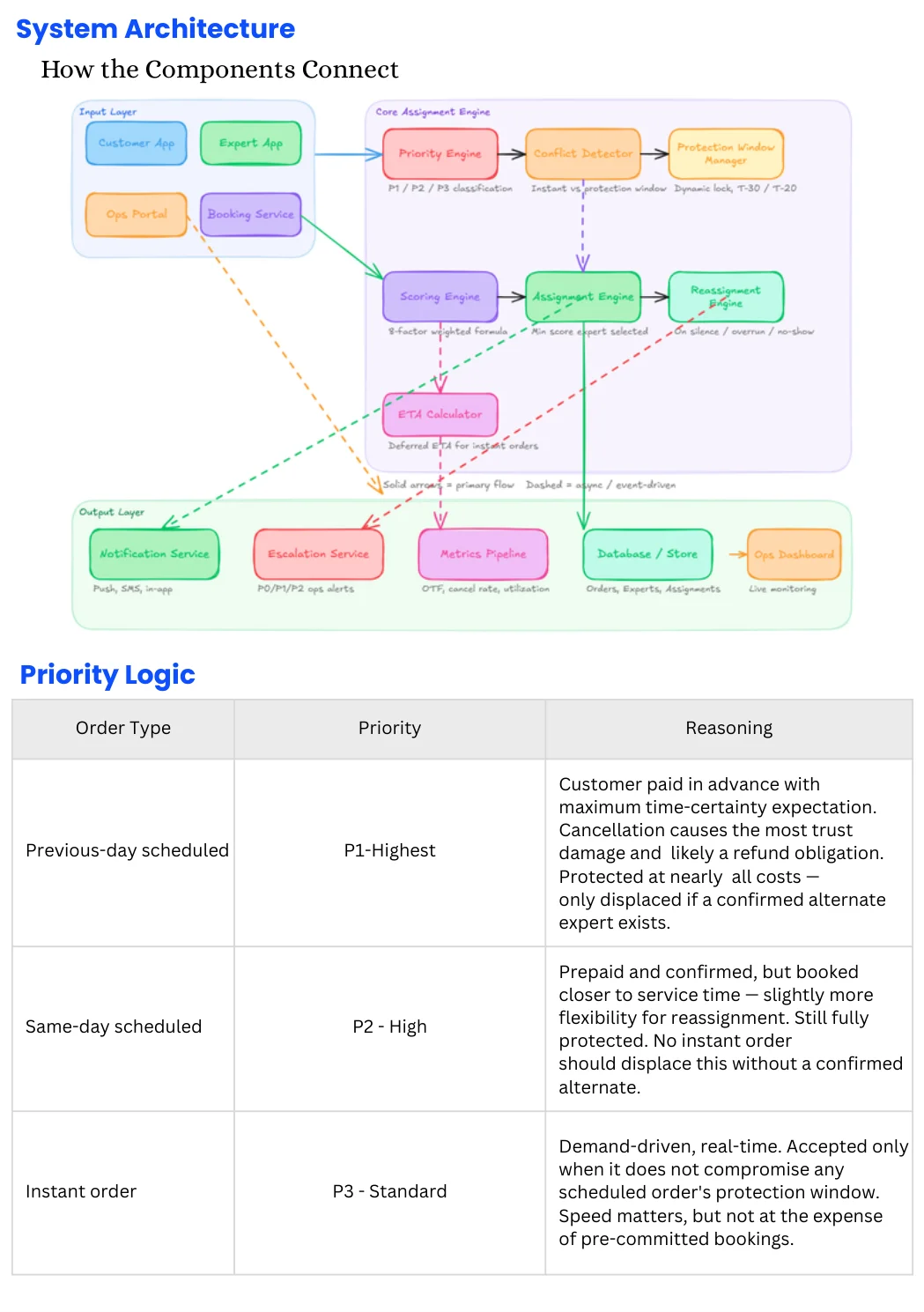
Priority Logic & System Architecture — P1/P2/P3 Classification Flow
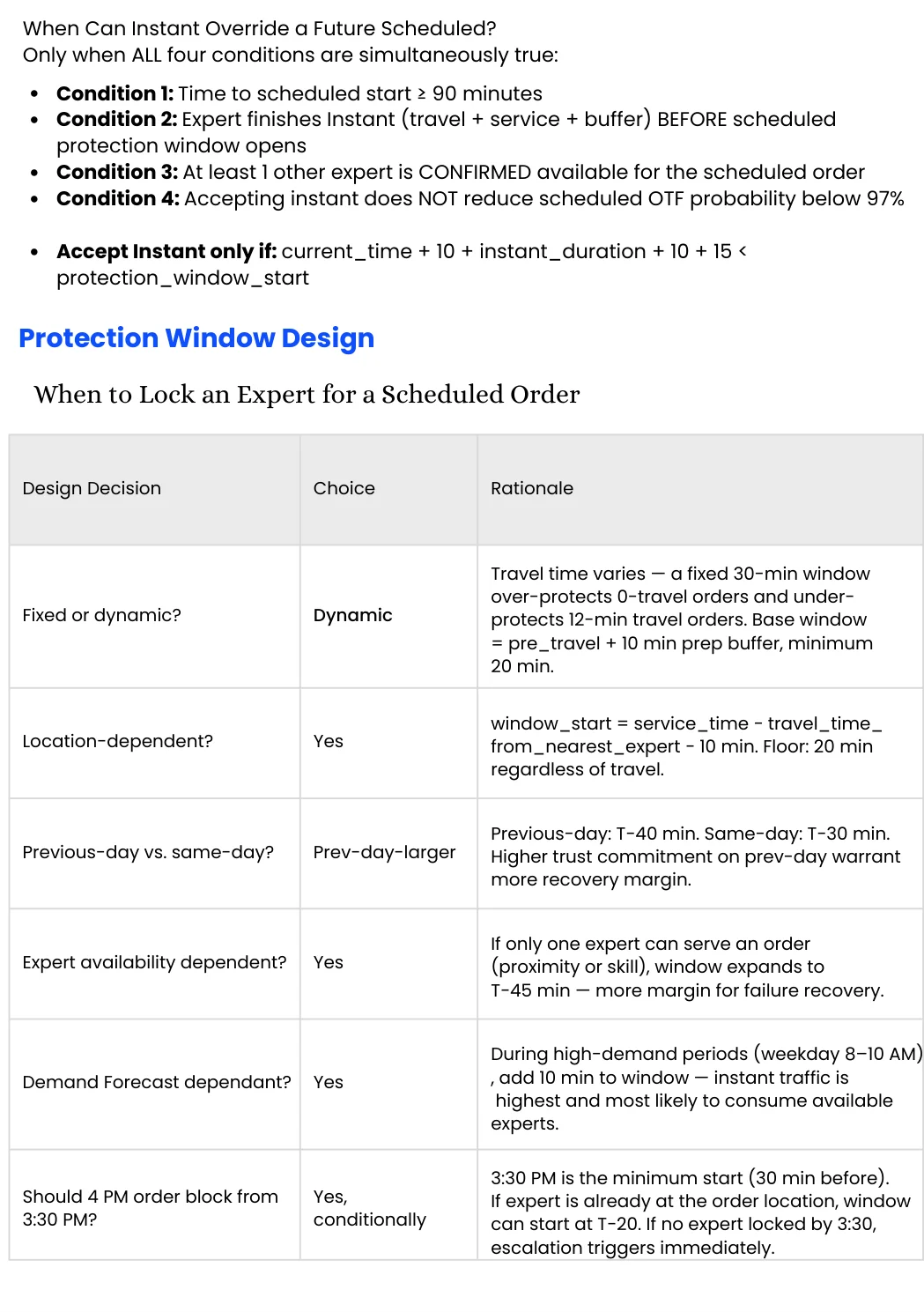
Protection Window Design — When to Lock an Expert for a Scheduled Order
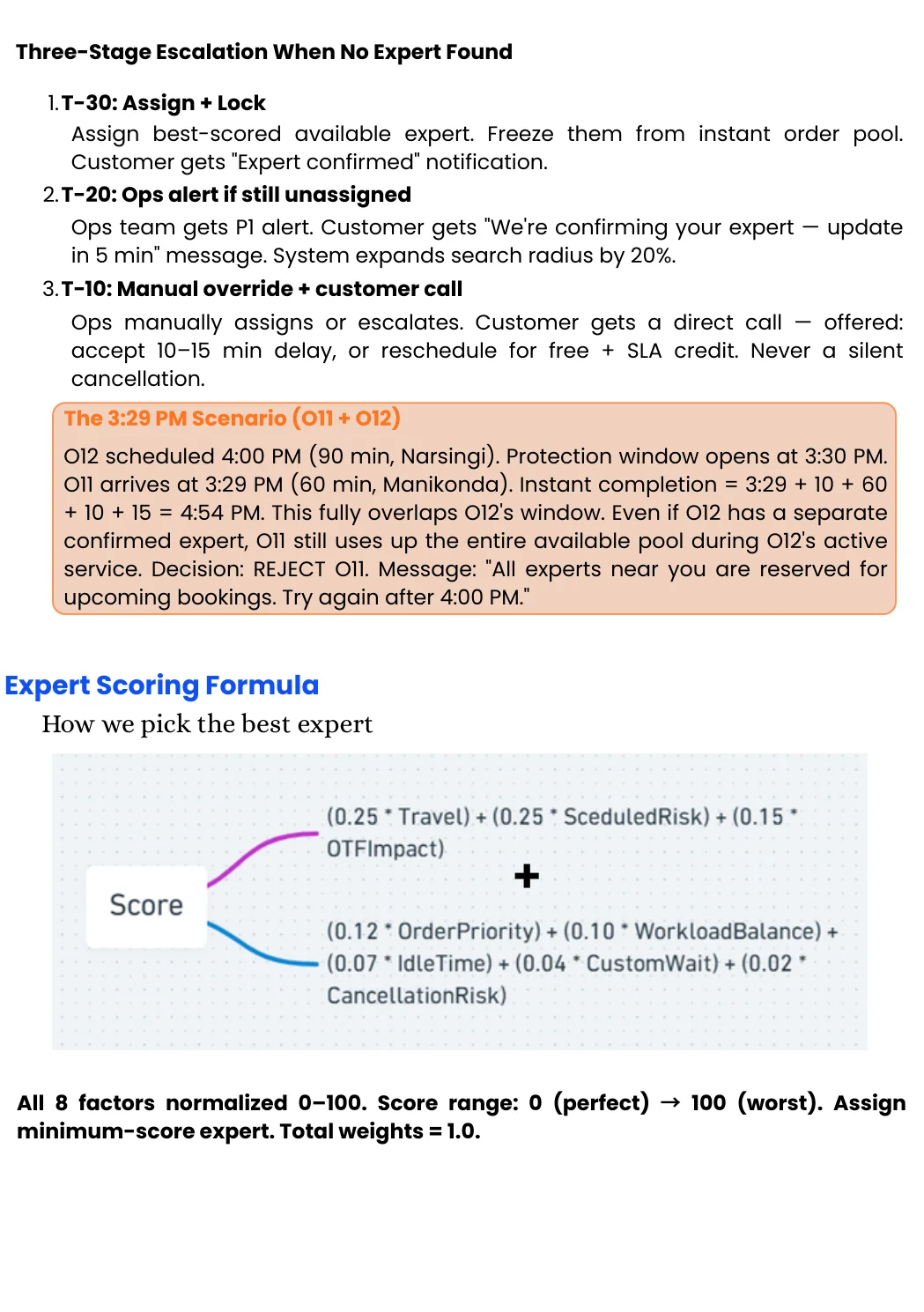
Three-Stage Escalation Flow & the 3:29 PM Instant vs. Scheduled Scenario
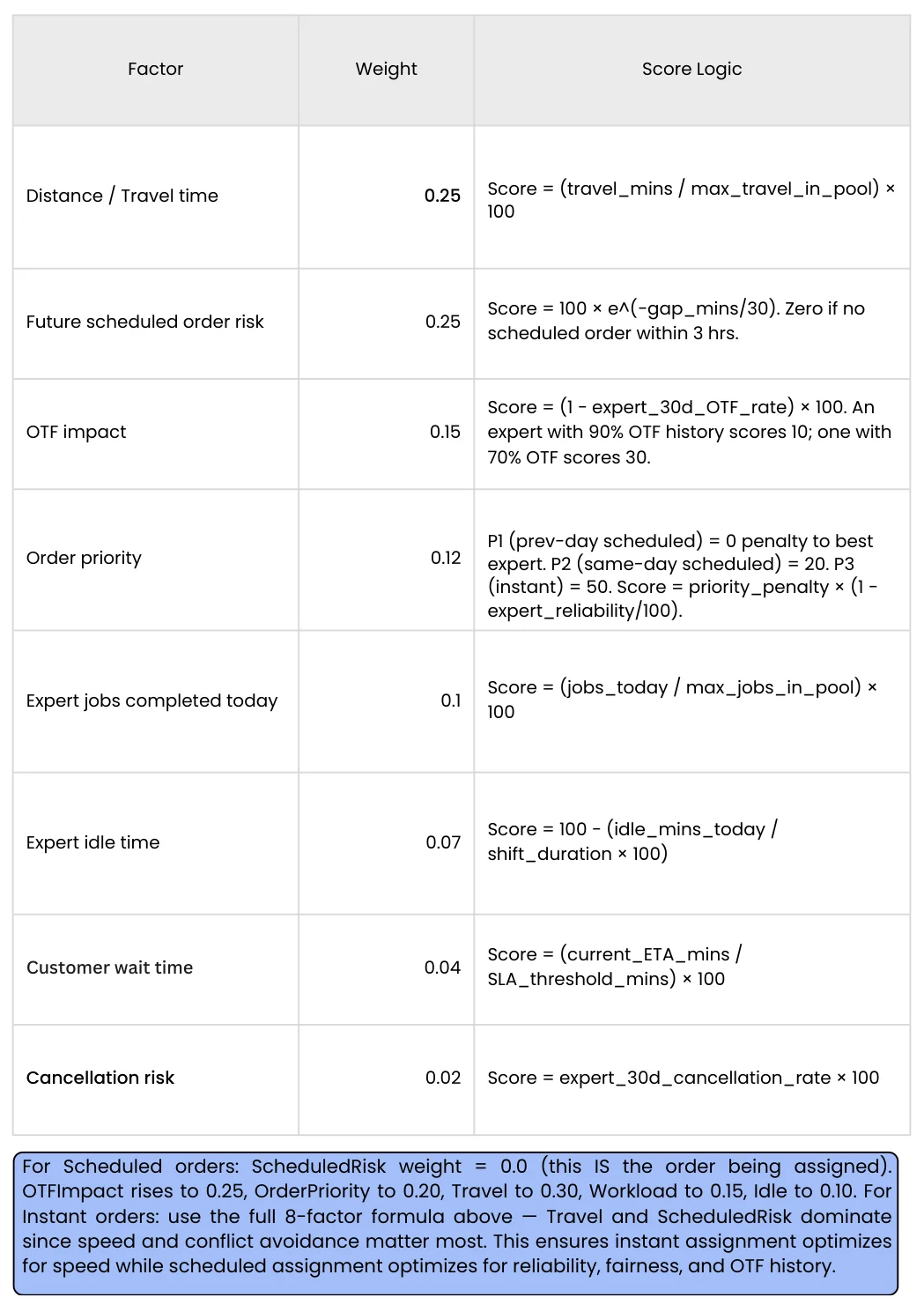
Expert Scoring Formula — 8 Weighted Factors Explained
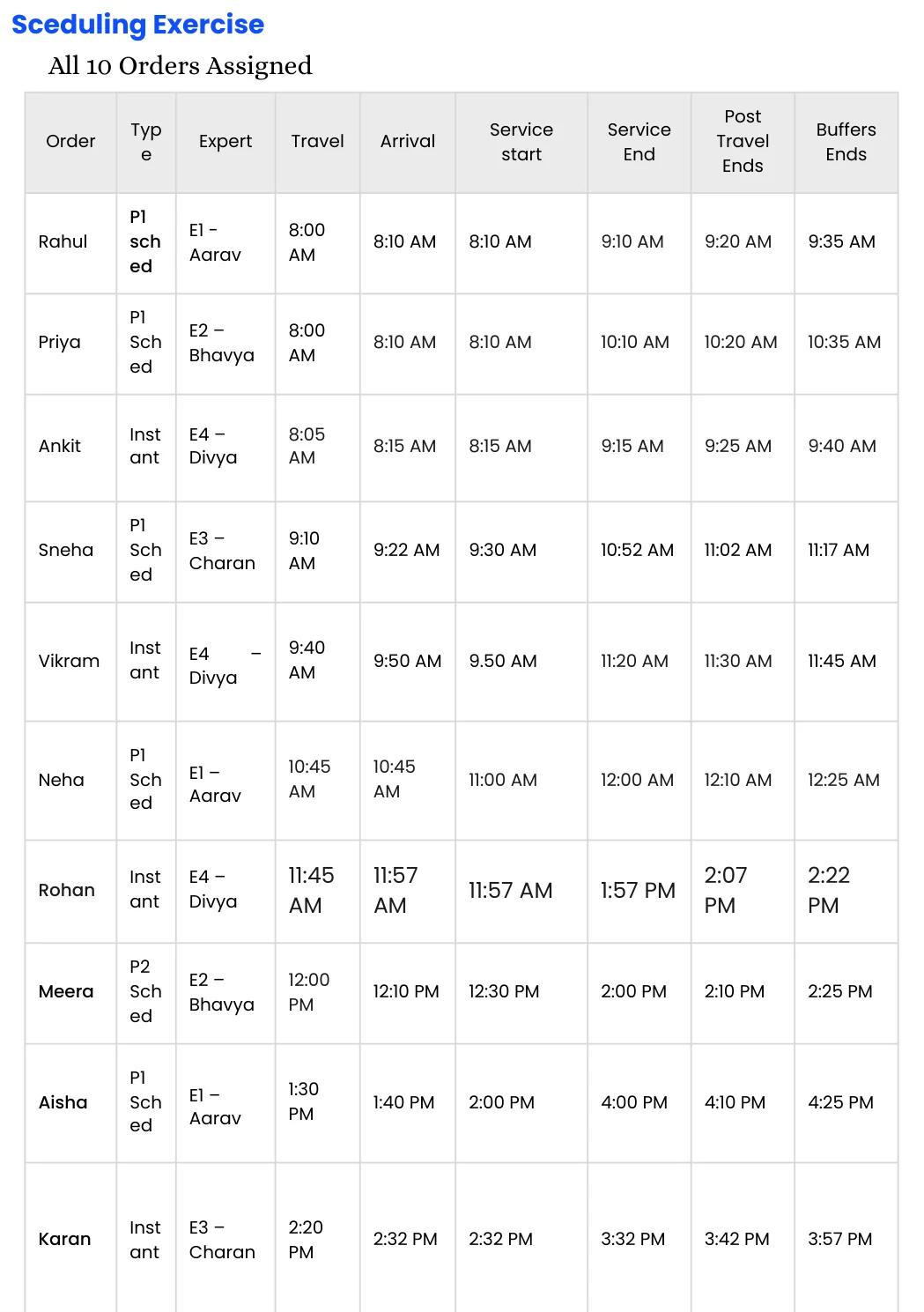
Scheduling Exercise — All 10 Orders Assigned End-to-End
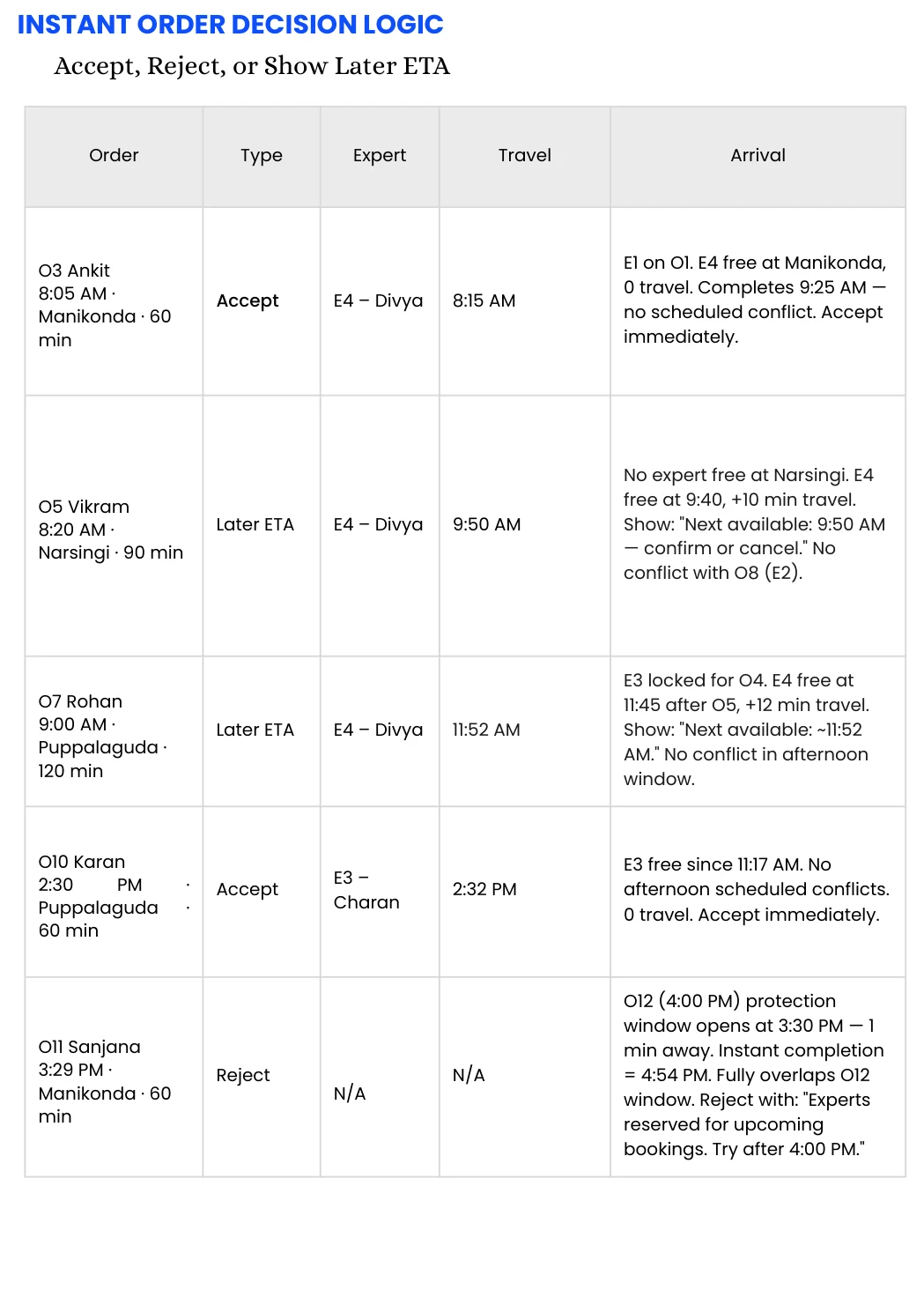
Instant Order Decision Logic — Accept, Reject, or Show Later ETA
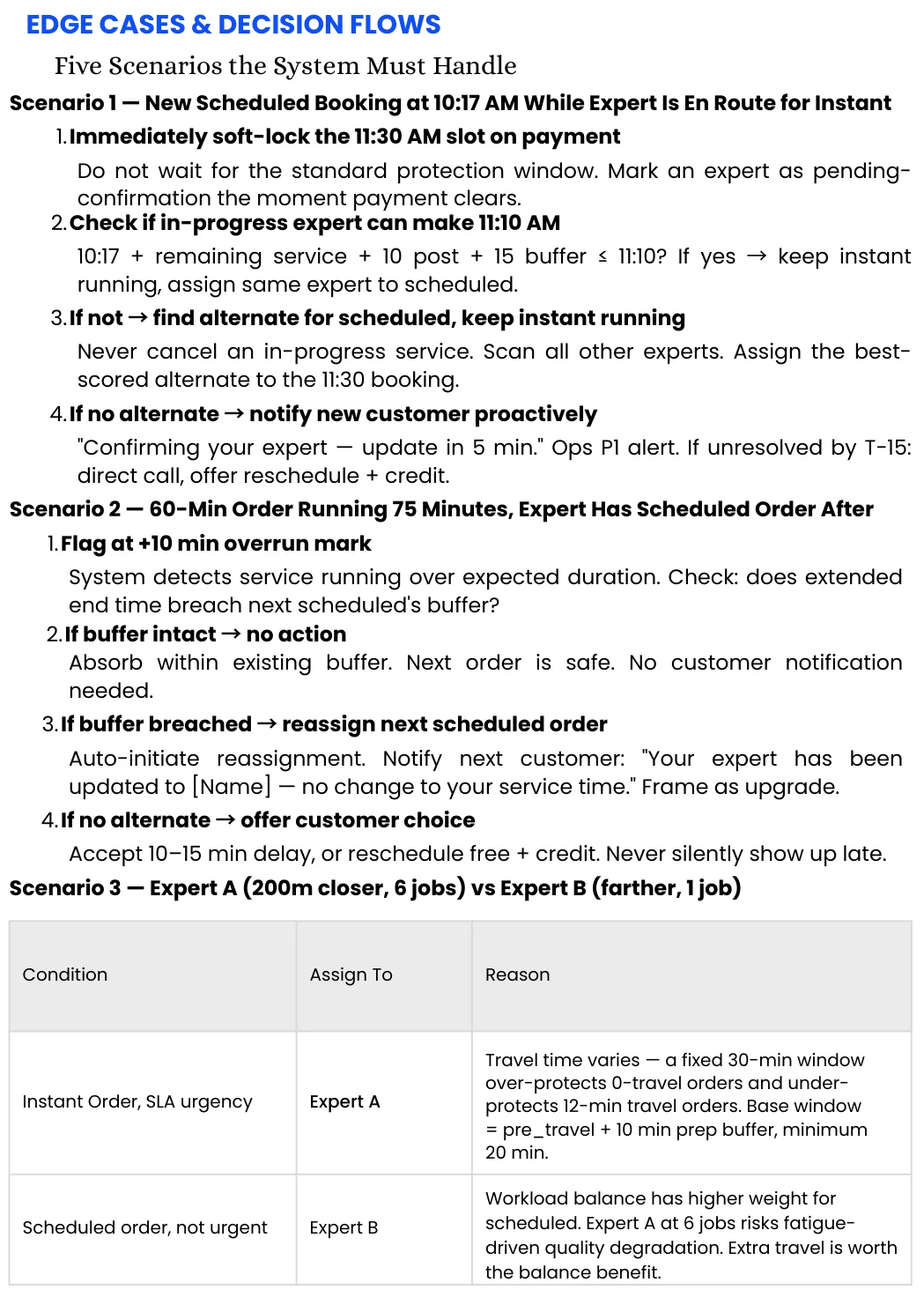
Edge Cases & Decision Flows — Five Scenarios the System Must Handle
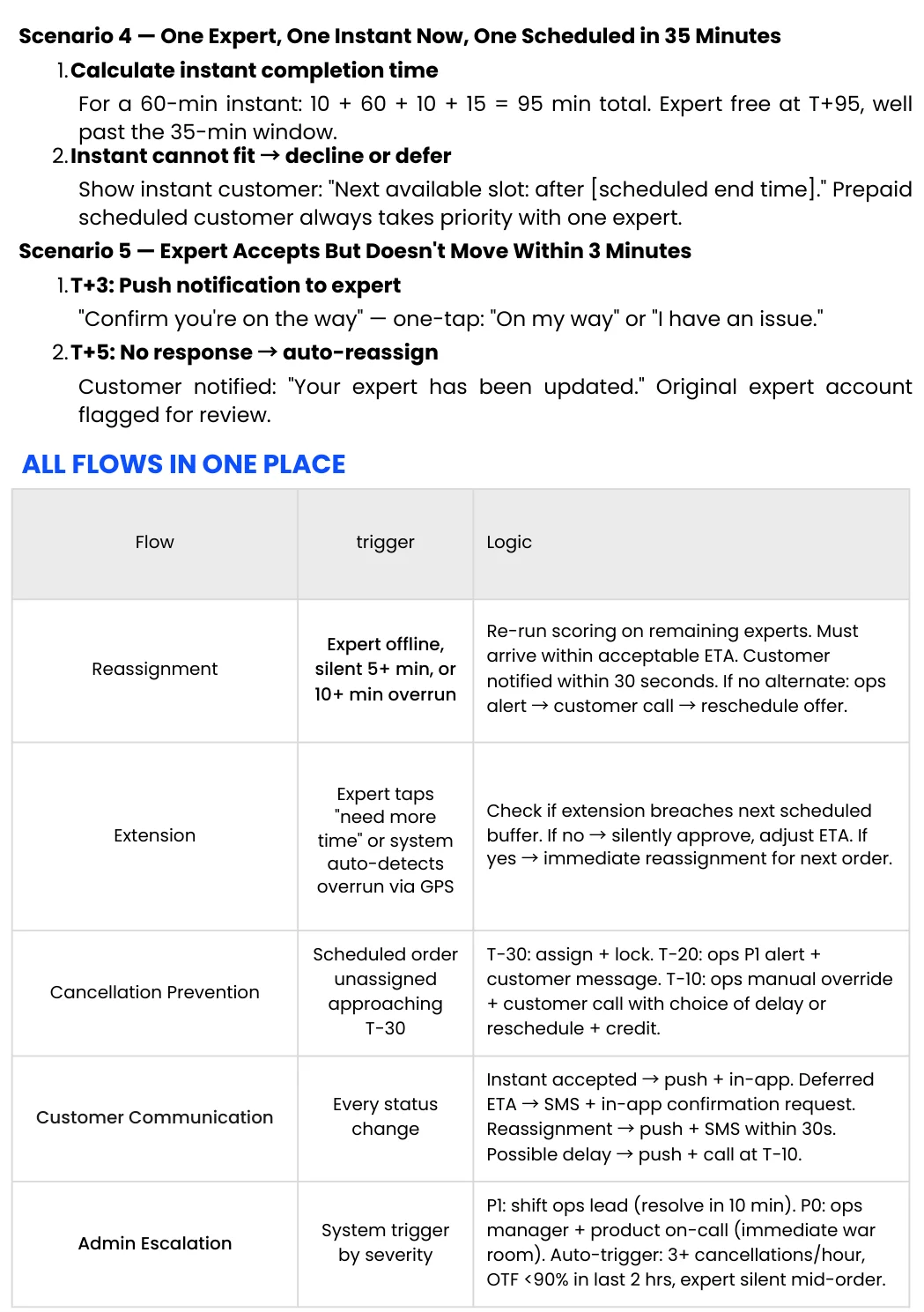
All Flows in One Place — Reassignment, Extension, Escalation, Communication
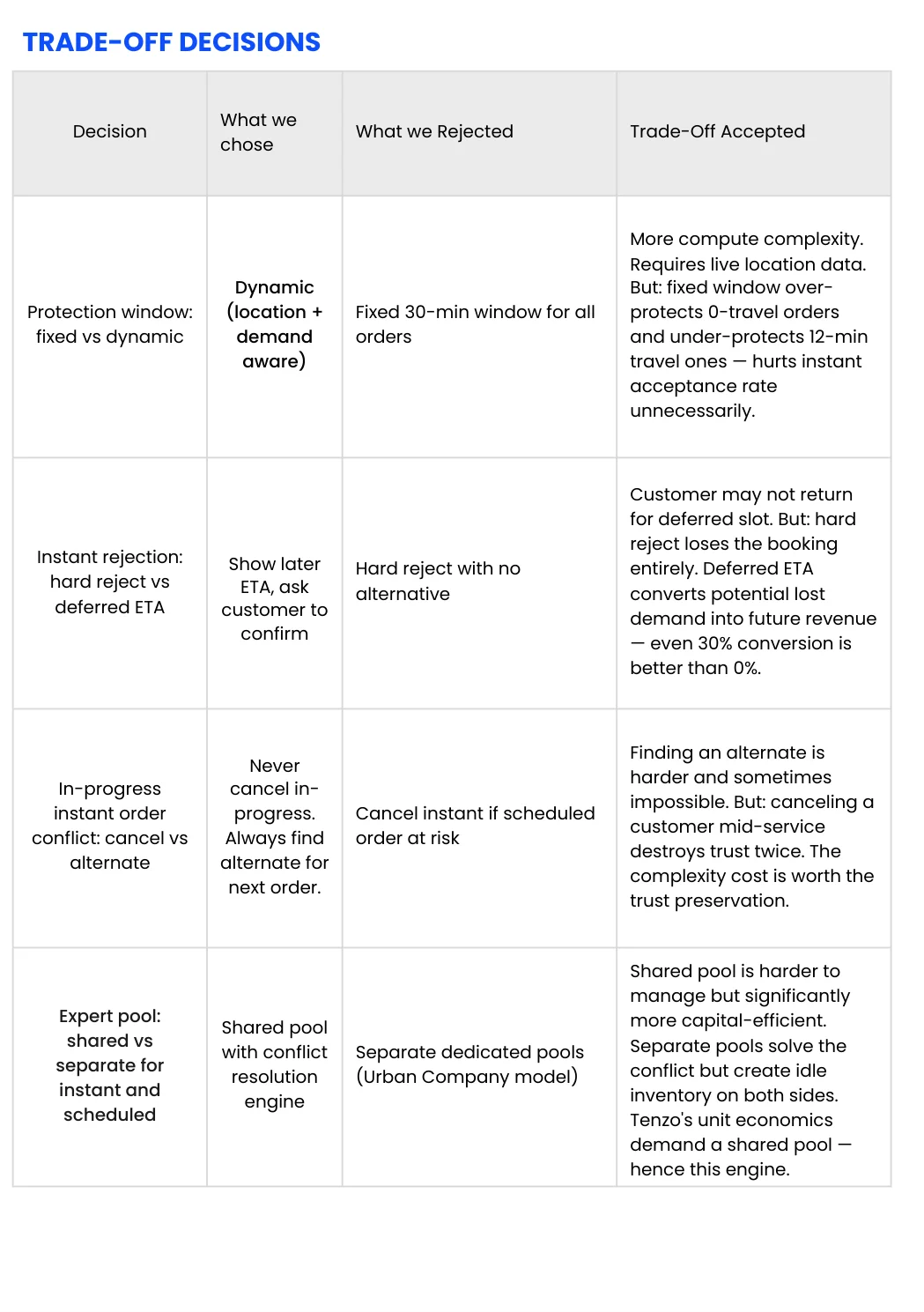
Trade-Off Decisions — What Was Chosen, Rejected, and Why
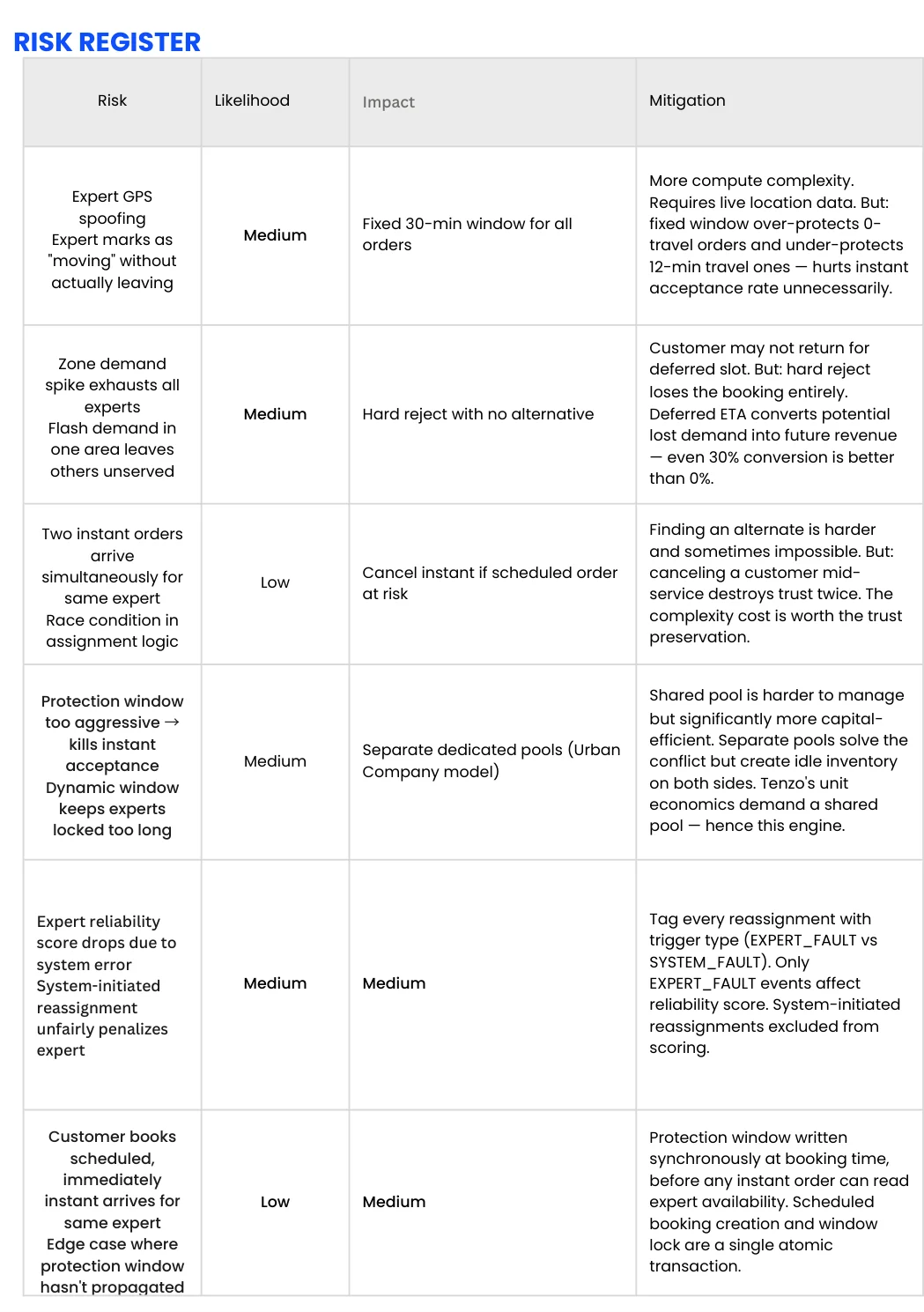
Risk Register — Likelihood, Impact, and Mitigation
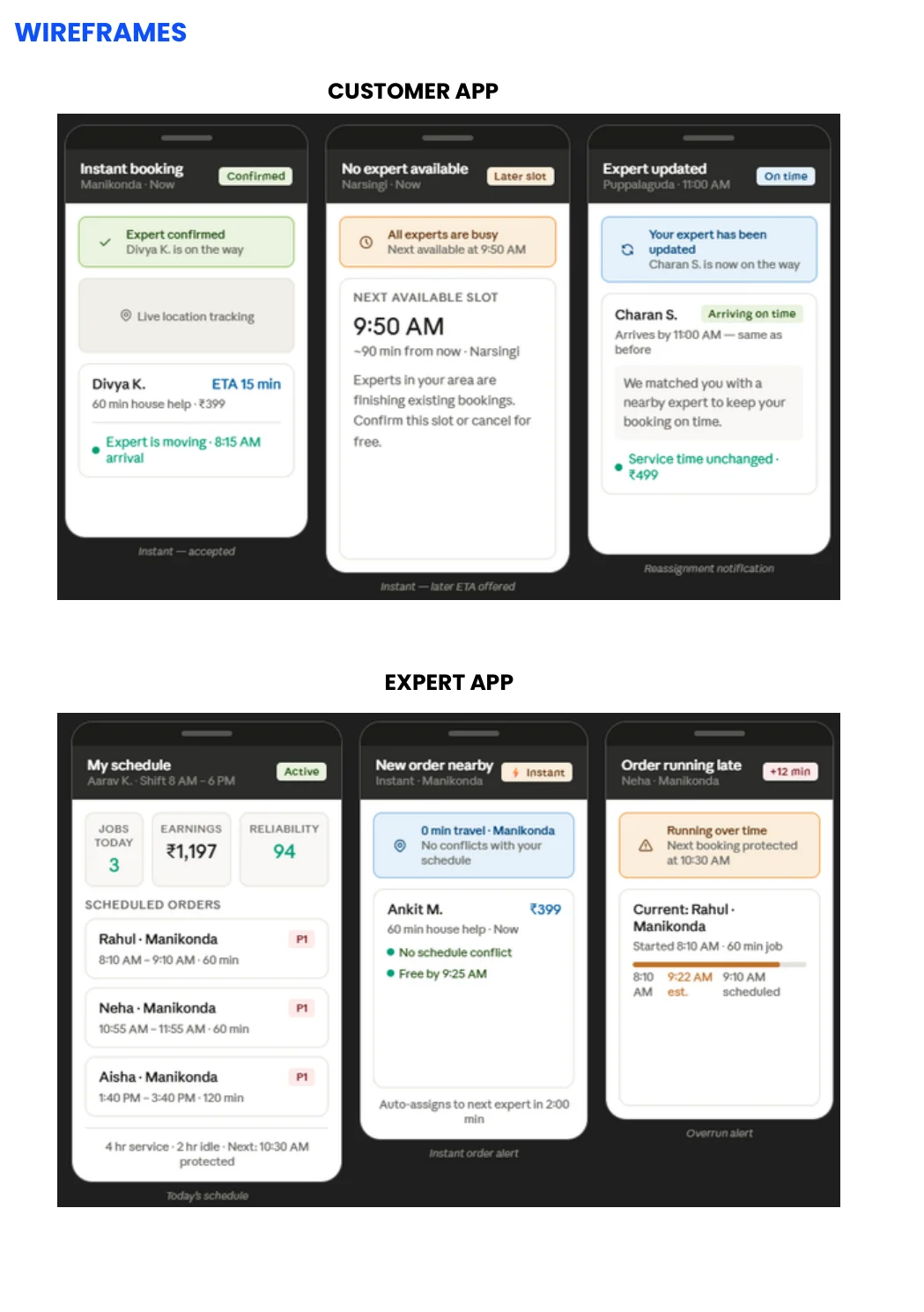
Wireframes — Customer App and Expert App
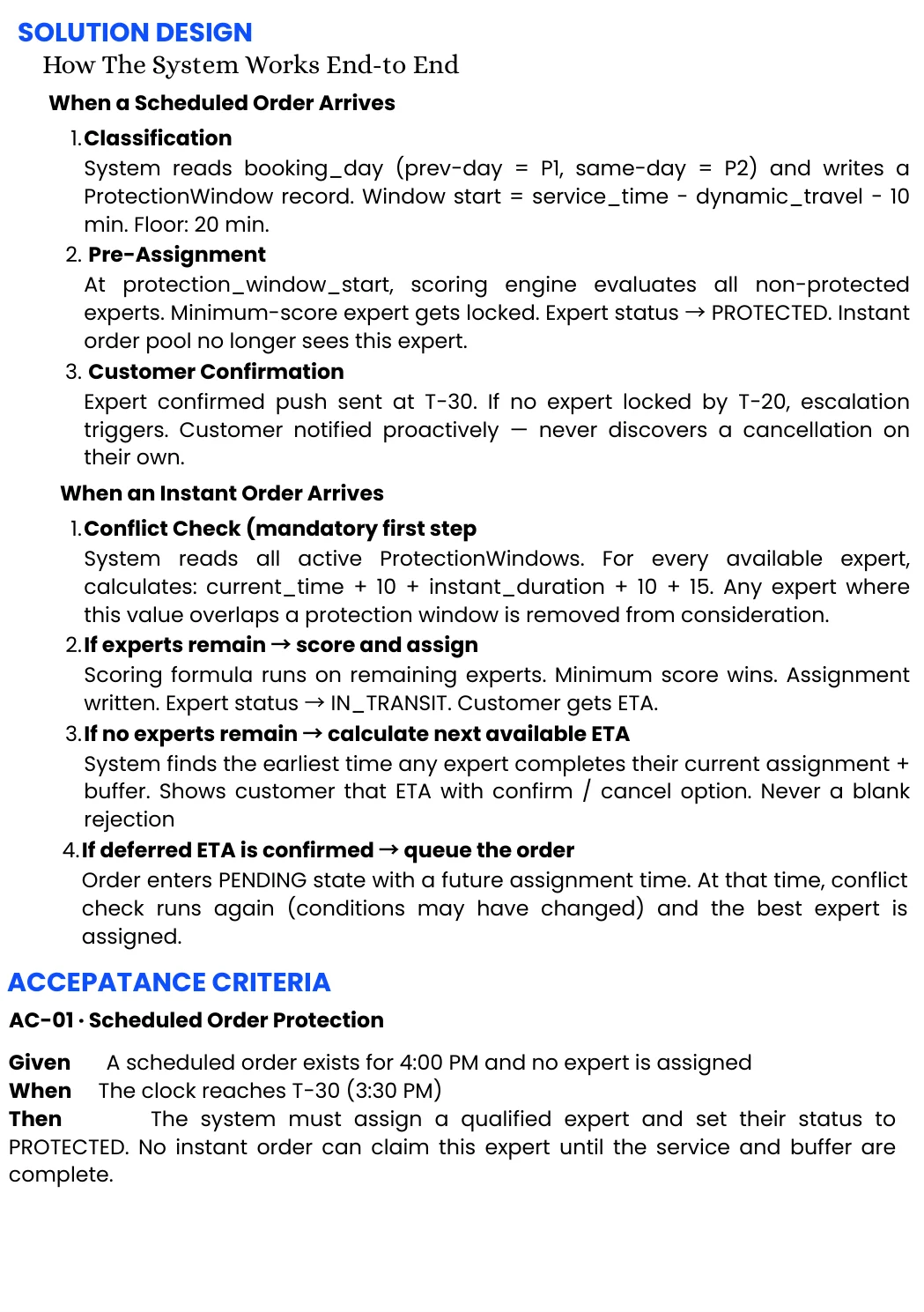
Solution Design End-to-End & Acceptance Criteria (AC-01, AC-02)
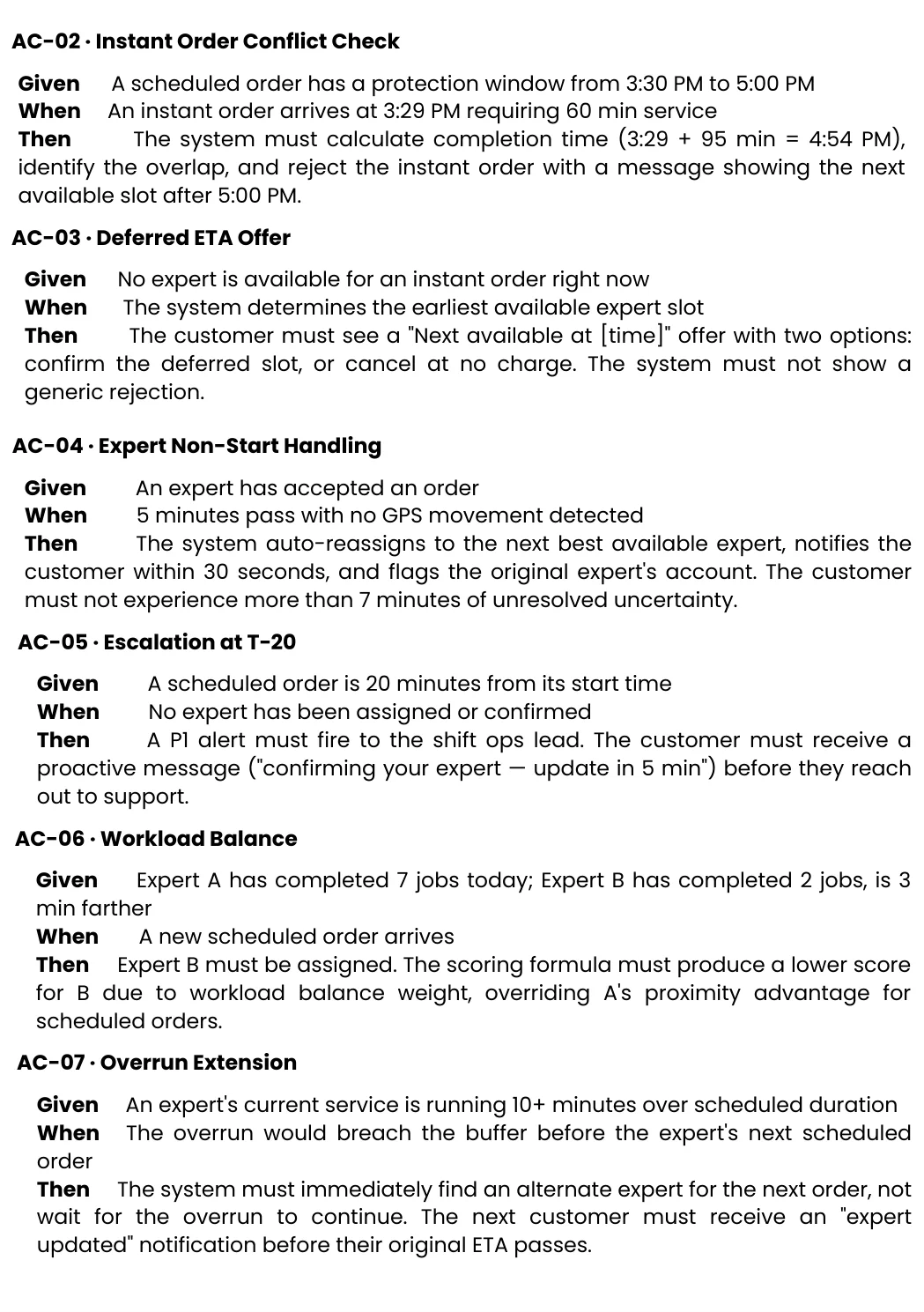
Acceptance Criteria — AC-02 through AC-07
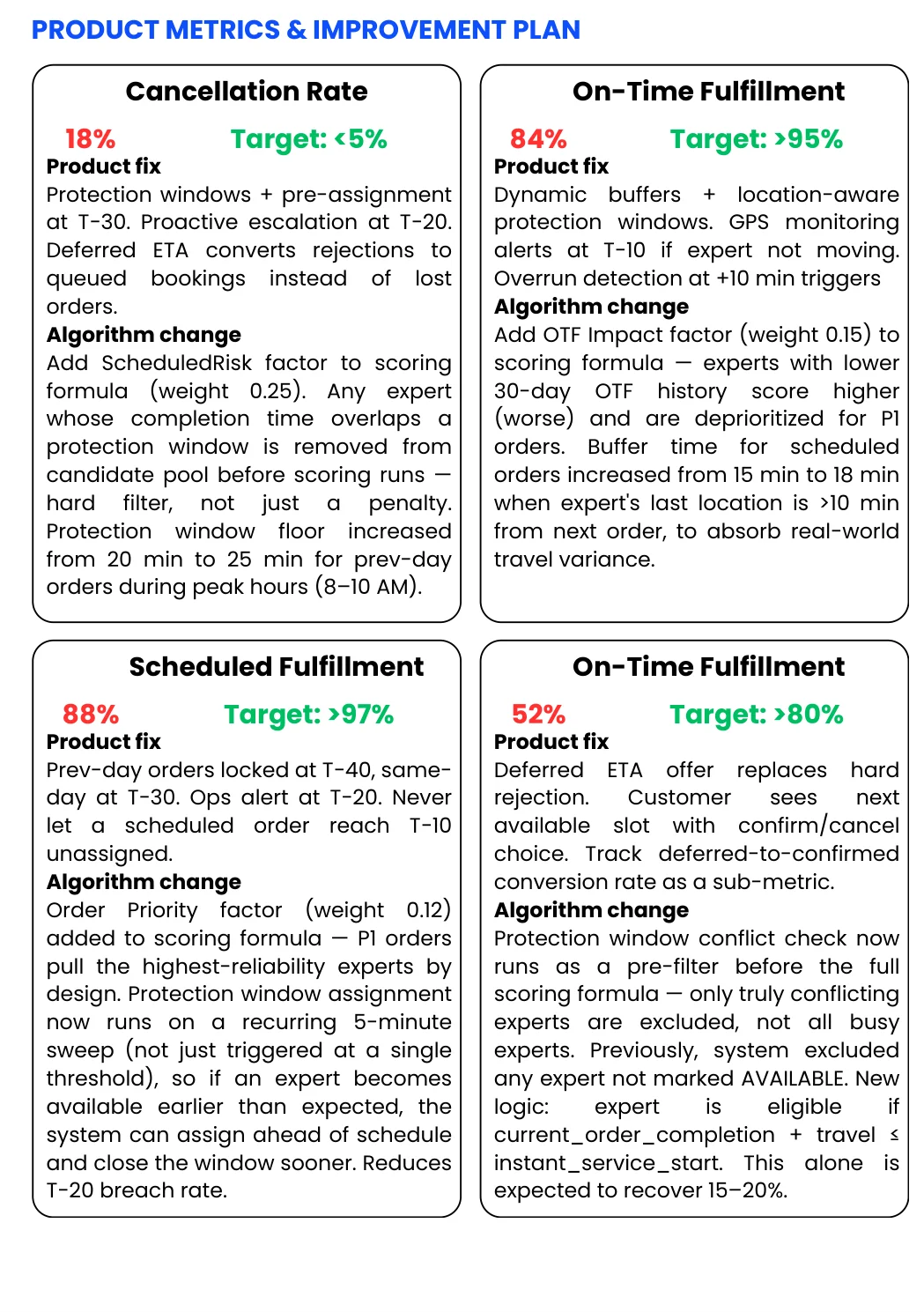
Product Metrics & Improvement Plan — Cancellation, OTF, Fulfillment, Acceptance
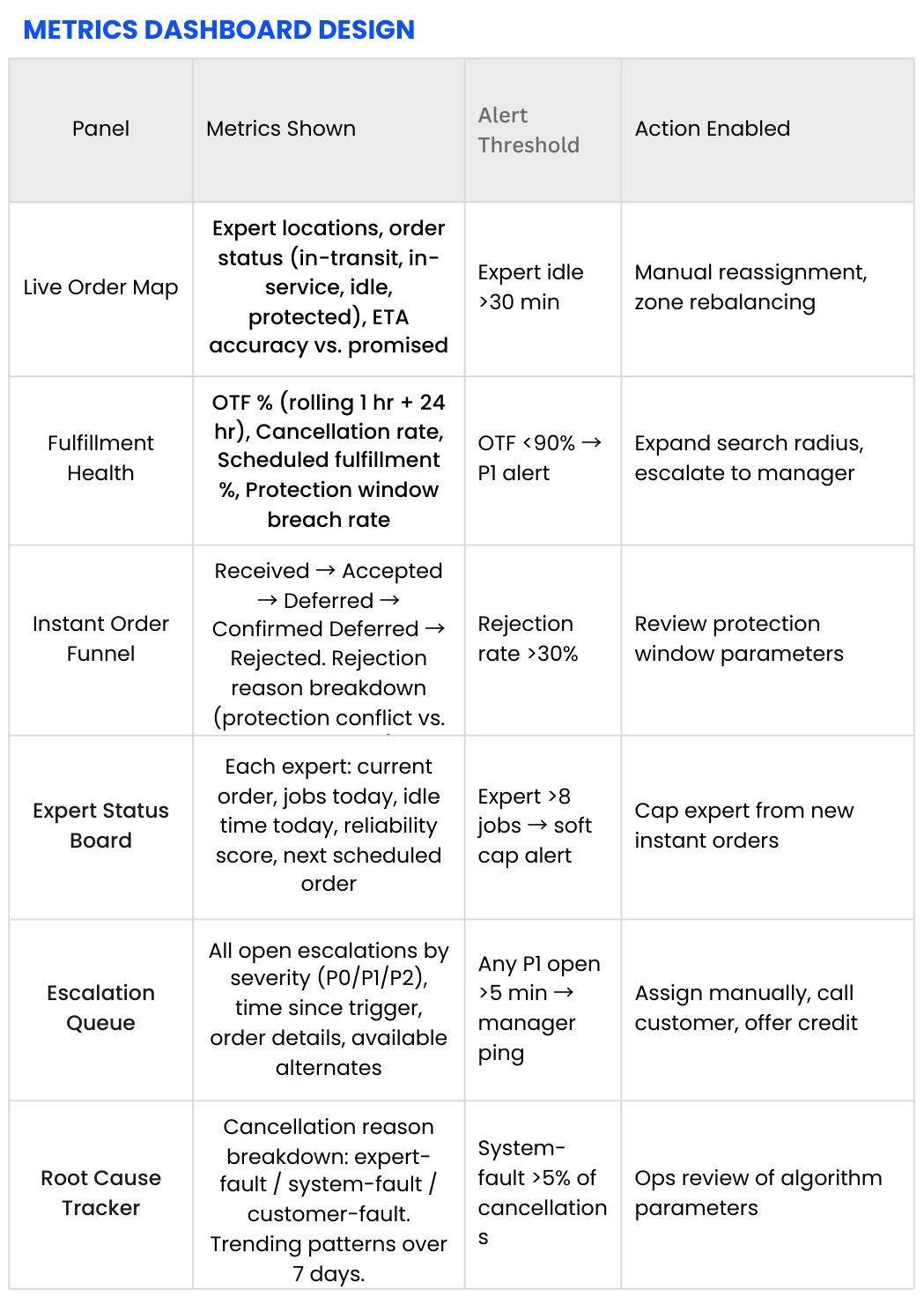
Metrics Dashboard Design — 6 Ops Panels with Alert Thresholds
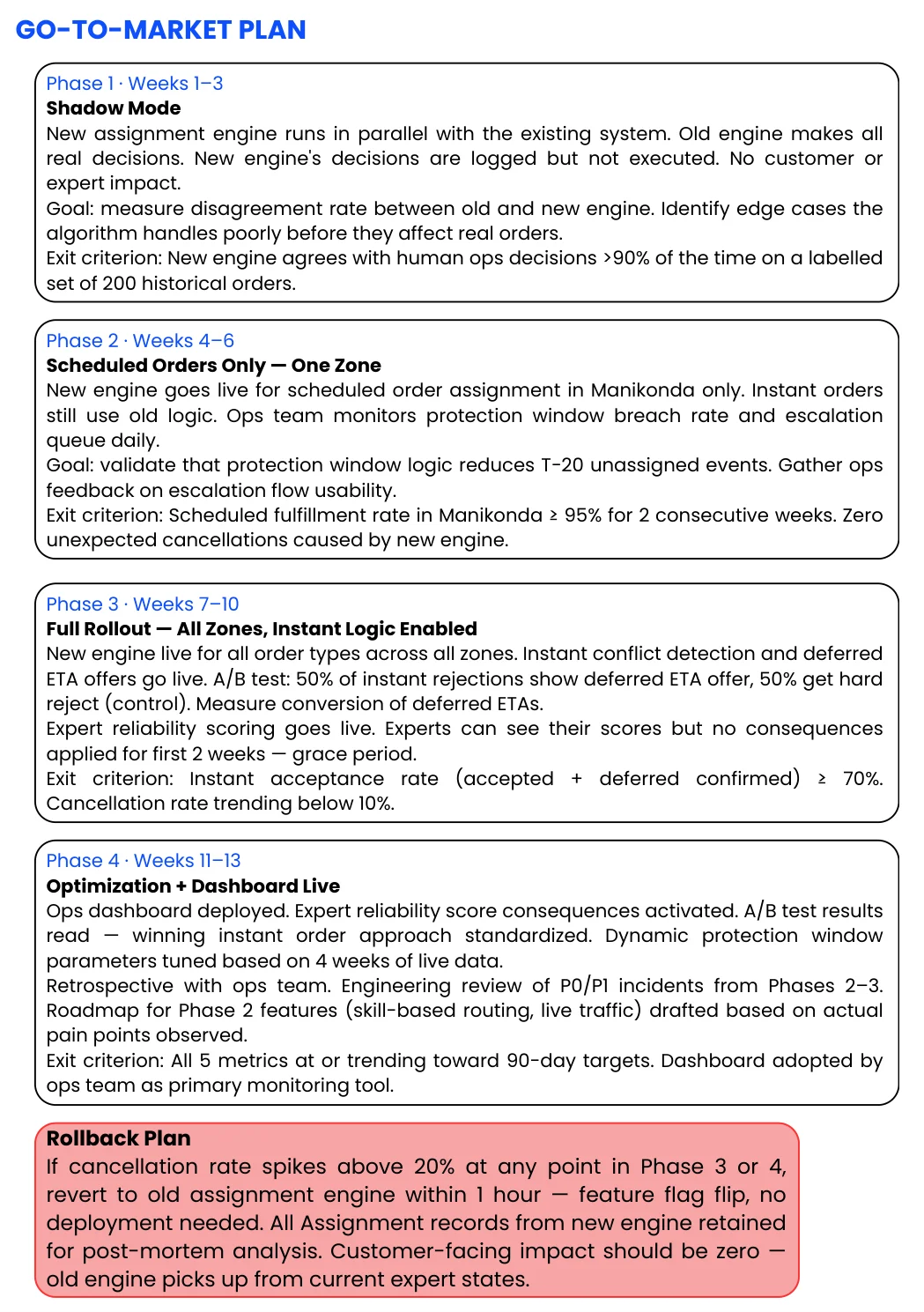
Go-to-Market Plan — 4-Phase Rollout with Rollback Plan
More product work and design explorations
Figma designs
→ PRD, instantly.
figprd
Figma → PRD Generator
Connect tools.
Ship better products.
PM Co-Pilot
AI-Powered PM Workspace
 ChatlyPRD
AI conversations,
finally executed.
Transforms AI conversations into structured execution pipelines.
Presented by
Kartik Bhalerao
ChatlyChatly PRD
AI Conversation Operationalization Platform
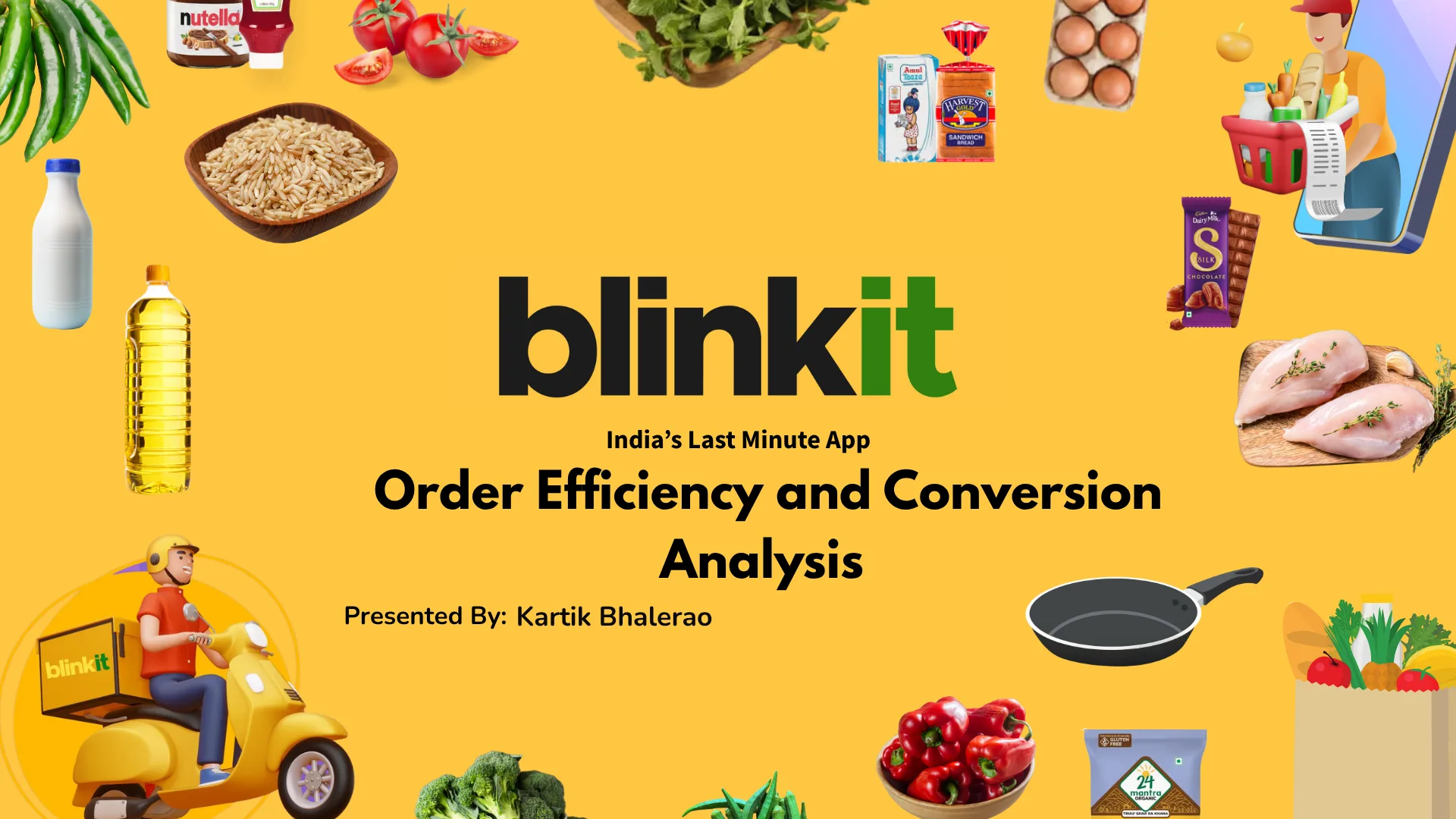
Blinkit Product Analysis
Order Efficiency & Conversion Optimization