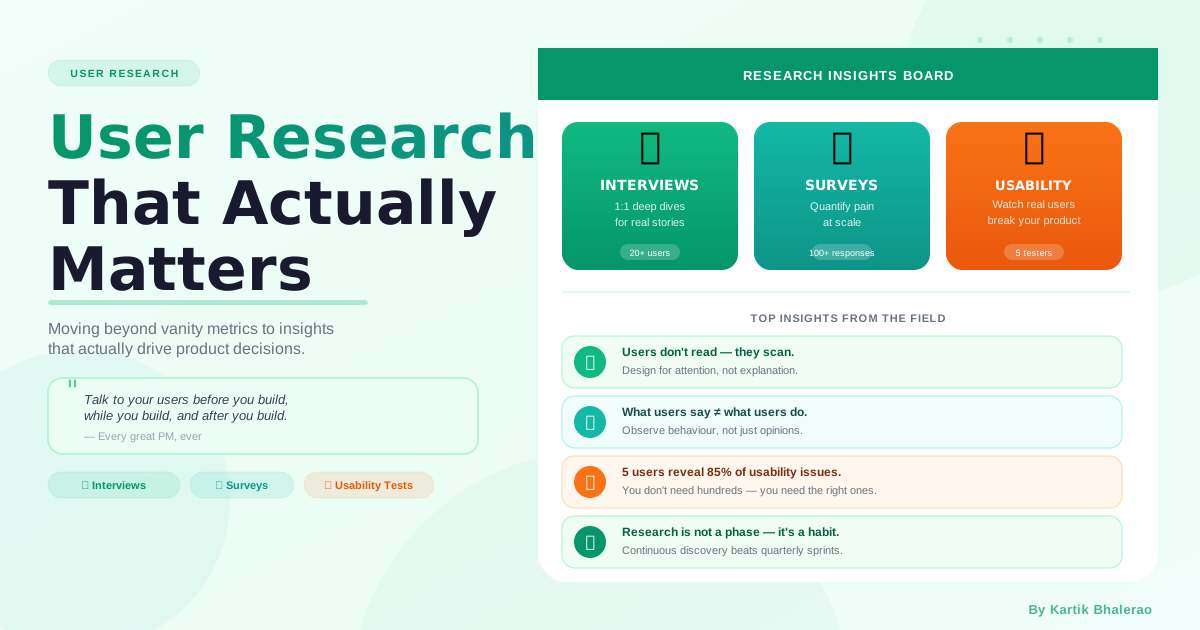
Moving beyond vanity metrics to insights that drive product decisions
Introduction
User research is often treated as a checkbox activity - something product teams do to validate decisions they've already made. But truly effective user research goes beyond confirmation bias to uncover unexpected insights that fundamentally change how you think about your product and users.
This guide explores how to conduct research that actually influences product decisions and drives meaningful outcomes.
The Problem with Traditional User Research
Common Research Pitfalls
Leading Questions: Asking users what you want to hear
- ❌ "Would you like this feature to be faster?"
- ✅ "Tell me about the last time you used this feature"
Confirmation Bias: Only seeking data that supports existing hypotheses
Solution Validation Instead of Problem Discovery: Testing solutions before understanding problems
Vanity Metrics Focus: Measuring satisfaction instead of behavior change
Why Research Often Gets Ignored
- Too Late in the Process: Research done after decisions are made
- Not Actionable: Insights that don't clearly inform next steps
- Lack of Context: Research without business or technical constraints
- Poor Communication: Complex findings not translated for stakeholders
Framework for Impactful User Research
1. Start with Clear Objectives
Define What You Need to Learn:
- What specific decisions does this research inform?
- What would you do differently based on potential findings?
- What level of confidence do you need in the results?
Example Research Questions:
- "Should we prioritize mobile or desktop experience first?"
- "What prevents users from completing onboarding?"
- "Which features drive long-term retention?"
2. Choose the Right Research Method
Quantitative vs. Qualitative:
- Quantitative: Measures what and how much (analytics, surveys)
- Qualitative: Reveals why and how (interviews, observations)
- Mixed Methods: Combines both for comprehensive insights
Method Selection Guide:
- User Interviews: Deep understanding of motivations and pain points
- Surveys: Broad validation of findings across user base
- Usability Testing: Identify specific interaction problems
- Analytics: Understand actual behavior patterns
- Card Sorting: Information architecture and mental models
3. Recruit the Right Participants
Quality Over Quantity:
- 5-8 in-depth interviews often more valuable than 50 surface-level surveys
- Real users vs. theoretical target audience
- Mix of current users, churned users, and prospects
Screening Criteria:
- Actual behavior, not demographic characteristics
- Recent experience with the problem you're solving
- Diverse perspectives within your target audience
Research Methods That Drive Decisions
Jobs-to-be-Done Interviews
Focus on User Motivations:
- What job is the user trying to accomplish?
- What alternatives do they currently use?
- What would make them switch solutions?
Sample Questions:
- "Walk me through the last time you [relevant task]"
- "What were you hoping to accomplish?"
- "What made that experience frustrating/successful?"
Behavioral Analysis
Combine Observation with Self-Reporting:
- Watch what users actually do, not just what they say
- Use session recordings and analytics to identify patterns
- Follow up with interviews to understand the "why"
Competitive Research
Learn from Others' Successes and Failures:
- How do competitors solve similar problems?
- What do users like/dislike about existing solutions?
- Where are the gaps in current market offerings?
Turning Research into Action
1. Synthesize Findings Effectively
Create Digestible Insights:
- Use personas based on behavioral patterns, not demographics
- Identify opportunity areas, not just problems
- Quantify impact where possible
Insight Format:
Finding: 70% of new users abandon onboarding at step 3
Insight: Users don't understand why they need to connect their bank account
Opportunity: Provide clear value explanation before requesting sensitive info
Impact: Could improve activation rate from 30% to 45%
2. Connect Research to Business Goals
Link User Needs to Business Outcomes:
- How do user pain points affect retention/revenue?
- Which user segments drive the most business value?
- What user behaviors predict long-term success?
3. Create Research-Driven Roadmaps
Prioritize Based on Research Insights:
- User impact × Business impact × Technical feasibility
- Address highest-pain problems for most valuable users first
- Balance user needs with business constraints
Building a Research-Driven Culture
1. Make Research Accessible
Democratize Insights:
- Share findings in multiple formats (videos, summaries, personas)
- Create searchable research repository
- Regular research share-outs with cross-functional teams
2. Involve Stakeholders in Research
Build Empathy Through Exposure:
- Have engineers and executives observe user interviews
- Share user feedback directly in product reviews
- Create customer advisory boards for ongoing input
3. Measure Research Impact
Track How Research Influences Decisions:
- Document how research findings change product direction
- Measure success of research-informed features
- Calculate ROI of research activities
Advanced Research Techniques
Longitudinal Studies
Track User Behavior Over Time:
- How do user needs evolve?
- What drives long-term engagement vs. churn?
- Which onboarding experiences predict success?
Ethnographic Research
Understand Context of Use:
- Observe users in their natural environment
- Understand social and environmental factors
- Identify unstated needs and workarounds
Diary Studies
Capture Real-Time Experiences:
- Users document their experiences as they happen
- Reduce recall bias in interviews
- Understand emotional journey over time
Common Research Mistakes
1. Asking Users to Predict Future Behavior
Problem: "Would you use this feature?"
Better: "Tell me about the last time you needed to [relevant task]"
2. Research Without Clear Decision Framework
Problem: Interesting insights that don't inform action
Solution: Define decision criteria before starting research
3. Only Researching Happy Users
Problem: Missing why users churn or don't adopt
Solution: Specifically recruit churned users and non-users
4. Not Validating Research Findings
Problem: Acting on insights from small sample sizes
Solution: Validate qualitative findings with quantitative data
Measuring Research Success
Research Quality Metrics
- Decision Influence: Percentage of research that changes product direction
- Stakeholder Engagement: Attendance at research presentations
- Finding Validation: How often research predictions prove accurate
Business Impact Metrics
- Feature Success Rate: Performance of research-informed features
- User Satisfaction: Improvement in NPS/CSAT scores
- Product-Market Fit: Progress toward key business metrics
- User Interviews: Calendly, User Interviews platform
- Survey Tools: Typeform, Google Forms, Hotjar
- Analytics: Google Analytics, Mixpanel, Amplitude
- Session Recording: Hotjar, LogRocket, FullStory
Analysis and Synthesis
- Transcription: Otter.ai, Rev.com
- Analysis: Airtable, Notion, Miro
- Presentation: Figma, Canva, Google Slides
Future of User Research
Emerging Trends
- AI-Powered Insights: Automated pattern recognition in user feedback
- Real-Time Research: Continuous feedback collection and analysis
- Behavioral Prediction: Using historical data to predict user needs
Skills for Product Managers
- Basic research methodology understanding
- Data analysis and synthesis capabilities
- Stakeholder communication and storytelling
- Bias recognition and mitigation
Conclusion
Effective user research is about asking the right questions, listening without bias, and translating insights into actionable product decisions. It's not about proving you're right - it's about learning what will make your product genuinely valuable to users.
The best product managers treat research as an ongoing conversation with users, not a one-time validation exercise. They use research to challenge assumptions, discover opportunities, and build products that solve real problems in meaningful ways.
What research methods have provided the most valuable insights for your product decisions? Share your experiences with user research in the comments.