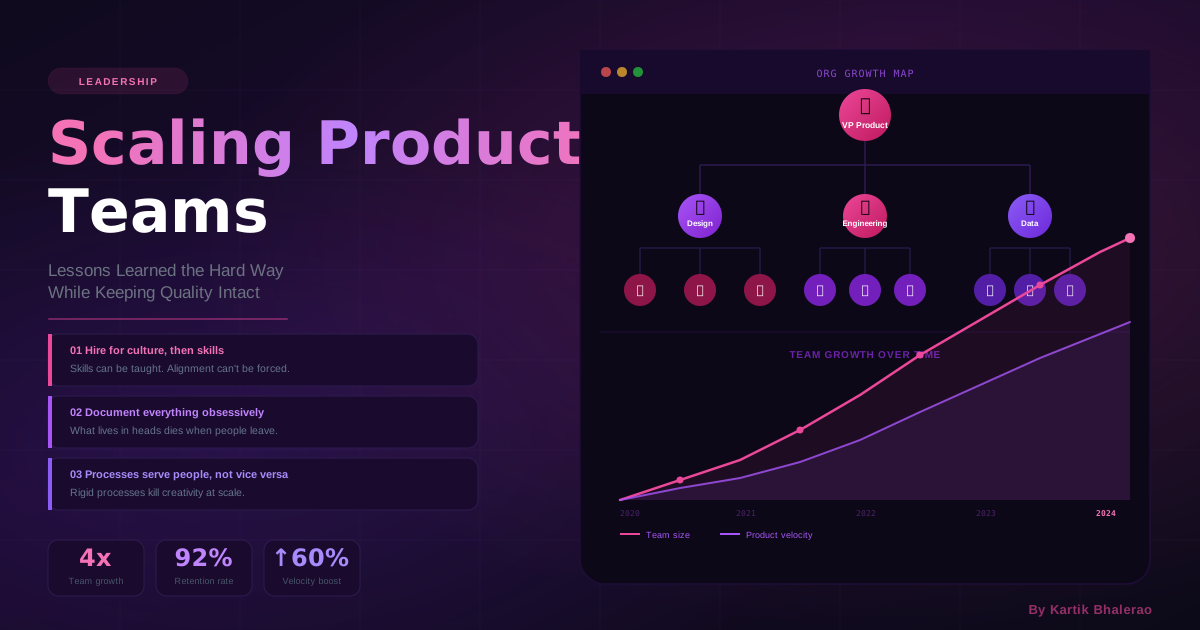
How to maintain product quality while growing your team
Introduction
Scaling a product team is one of the most challenging aspects of product management. As teams grow from 3-5 people to 20-50+, maintaining product quality, team alignment, and decision-making speed becomes increasingly difficult.
This guide shares lessons learned from scaling product teams, common pitfalls to avoid, and frameworks that help maintain excellence as you grow.
The Scaling Challenge
Why Scaling is Hard
Communication Complexity: Communication paths grow exponentially with team size
- 3 people = 3 communication channels
- 10 people = 45 communication channels
- 20 people = 190 communication channels
Knowledge Distribution: Information that was once shared becomes siloed
Decision Speed: More stakeholders slow down decision-making
Culture Dilution: Original team culture becomes harder to maintain
Signs You Need to Scale
- Individual team members becoming bottlenecks
- Context switching reducing productivity
- Feature delivery slowing despite more resources
- User needs outpacing team capacity
- Strategic initiatives getting delayed
Framework for Successful Team Scaling
1. Team Structure Design
Product Team Models:
- Feature Teams: Organized around specific product areas
- Platform Teams: Supporting infrastructure and shared services
- Growth Teams: Focused on user acquisition and retention
- Innovation Teams: Exploring new opportunities
Team Composition (5-7 people per team):
- 1 Product Manager
- 1 Tech Lead/Senior Engineer
- 2-3 Engineers
- 1 Designer (can be shared across 2 teams)
- 1 Data Analyst (shared across multiple teams)
2. Ownership and Accountability
Clear Domain Boundaries:
- Each team owns specific user journeys or product areas
- Minimal overlap between team responsibilities
- Clear escalation paths for cross-team decisions
Example Team Structure:
Onboarding Team:
- Owns: Sign-up flow, first-time user experience
- Success Metric: User activation rate
- Dependencies: Identity platform (Platform team)

Core Product Team:
- Owns: Main product features and workflows
- Success Metric: Daily active usage
- Dependencies: Analytics (Platform team)
Communication and Coordination
Documentation Strategy:
- Product Requirements: Centralized, version-controlled specs
- Architecture Decisions: Technical decision log and rationale
- Team Processes: Clear workflows and responsibility matrices
Knowledge Sharing Systems:
- Weekly team demos and updates
- Quarterly product review meetings
- Searchable knowledge base (Notion, Confluence)
2. Cross-Team Coordination
Regular Touchpoints:
- Daily: Team standups within individual teams
- Weekly: Cross-team sync meetings for dependencies
- Monthly: All-hands product reviews and planning
- Quarterly: Strategic planning and OKR setting
Dependency Management:
- Advance planning for cross-team dependencies
- Clear SLAs for shared services
- Escalation processes for blocking issues
Maintaining Product Quality
1. Quality Standards and Processes
Code Quality:
- Consistent code review processes
- Automated testing requirements
- Shared coding standards and practices
Product Quality:
- User acceptance criteria standards
- QA processes and testing protocols
- Performance and reliability benchmarks
2. Continuous Improvement
Regular Retrospectives:
- Team-level retrospectives (every 2 weeks)
- Cross-team retrospectives (monthly)
- Process improvement tracking and implementation
Quality Metrics:
- Bug rates and resolution times
- User satisfaction scores
- Performance benchmarks
- Technical debt tracking
Decision-Making at Scale
1. Decision Framework
RACI Matrix for Different Decision Types:
- Feature Decisions: Product Manager (R), Team (A), Stakeholders (C), Leadership (I)
- Technical Decisions: Tech Lead (R), Engineers (A), PM (C), Architecture team (I)
- Strategic Decisions: Leadership (R), PMs (A), Teams (C)
2. Delegation and Empowerment
Decision Authority Levels:
- Level 1: Individual team members can decide independently
- Level 2: Team consensus required
- Level 3: Cross-team alignment needed
- Level 4: Leadership approval required
Empowerment Guidelines:
- Clear boundaries for autonomous decision-making
- Regular check-ins without micromanagement
- Support for learning from mistakes
Hiring and Onboarding
1. Hiring Strategy
Role Definition:
- Clear job descriptions with specific responsibilities
- Technical and cultural fit assessments
- Growth potential evaluation
Interview Process:
- Structured interviews with multiple team members
- Practical problem-solving exercises
- Cultural values assessment
2. Onboarding Framework
First Week:
- Product and user overview
- Team introductions and mentorship assignment
- Development environment setup
First Month:
- Small feature implementation
- User research observation
- Process and tool training
First Quarter:
- Independent feature ownership
- Cross-team collaboration project
- Performance feedback and goal setting
Leadership and Culture
1. Maintaining Culture
Culture Preservation Strategies:
- Document and communicate core values
- Regular culture check-ins and surveys
- New hire cultural immersion programs
Cultural Elements to Preserve:
- User-centric decision making
- Quality standards and craftsmanship
- Collaborative problem-solving
- Continuous learning mindset
2. Leadership Development
Growing Product Leaders:
- Mentorship programs for junior PMs
- Cross-team project leadership opportunities
- External training and conference attendance
Management Training:
- People management skills development
- Performance review and feedback training
- Strategic thinking and planning workshops
Common Scaling Pitfalls
1. Premature Optimization
Problem: Over-engineering processes before they're needed
Solution: Start simple, add complexity as required
2. Communication Overhead
Problem: Too many meetings and status updates
Solution: Asynchronous communication as default, meetings for decisions only
3. Lost Customer Focus
Problem: Internal processes become more important than user needs
Solution: Regular user research and customer feedback sessions
4. Feature Factory Syndrome
Problem: Focusing on output rather than outcomes
Solution: OKR framework tied to user and business outcomes
Measuring Scaling Success
Team Health Metrics
- Velocity: Feature delivery speed and consistency
- Quality: Bug rates and user satisfaction
- Engagement: Team satisfaction and retention
- Alignment: Cross-team collaboration effectiveness
Product Metrics
- User Experience: NPS, CSAT, task completion rates
- Business Impact: Revenue, retention, acquisition metrics
- Technical Health: Performance, reliability, security metrics
Process Metrics
- Decision Speed: Time from problem identification to solution
- Knowledge Sharing: Documentation quality and usage
- Innovation: New ideas generated and tested
Project Management
- Planning: Jira, Linear, Asana
- Documentation: Notion, Confluence, GitBook
- Communication: Slack, Microsoft Teams
Product Development
- Design: Figma, Sketch, Adobe XD
- Analytics: Mixpanel, Amplitude, Google Analytics
- Testing: TestFlight, Firebase, LaunchDarkly
Technical Infrastructure
- Code Management: GitHub, GitLab, Bitbucket
- CI/CD: Jenkins, CircleCI, GitHub Actions
- Monitoring: Datadog, New Relic, Sentry
Future Considerations
Remote and Distributed Teams
- Asynchronous communication protocols
- Time zone coordination strategies
- Virtual team building and culture maintenance
AI and Automation
- Automated testing and deployment
- AI-assisted code review and quality checking
- Predictive analytics for team performance
Conclusion
Scaling product teams successfully requires intentional design of processes, communication systems, and culture preservation strategies. The goal is to maintain the agility and quality of a small team while gaining the capacity and capabilities of a larger organization.
Success comes from balancing structure with flexibility, maintaining user focus amid internal complexity, and investing in people development alongside process improvement.
The key is to scale thoughtfully - adding structure when needed, but not before, and always keeping the user experience as the ultimate measure of success.
What challenges have you faced when scaling product teams? Share your experiences and lessons learned in the comments below.