7 min left

    0% read

    MoSCoW: The Prioritization Method That Saves Your Sanity (and Your Sprint)
    strategy
    JUL 14, 2025

    MoSCoW: The Prioritization Method That Saves Your Sanity (and Your Sprint)

    As a PM, it often feels like you're building a rocket ship with IKEA instructions. MoSCoW is the framework that brings clarity to chaos.

    PrioritizationProduct ManagementAgileMoSCoW

    Introduction

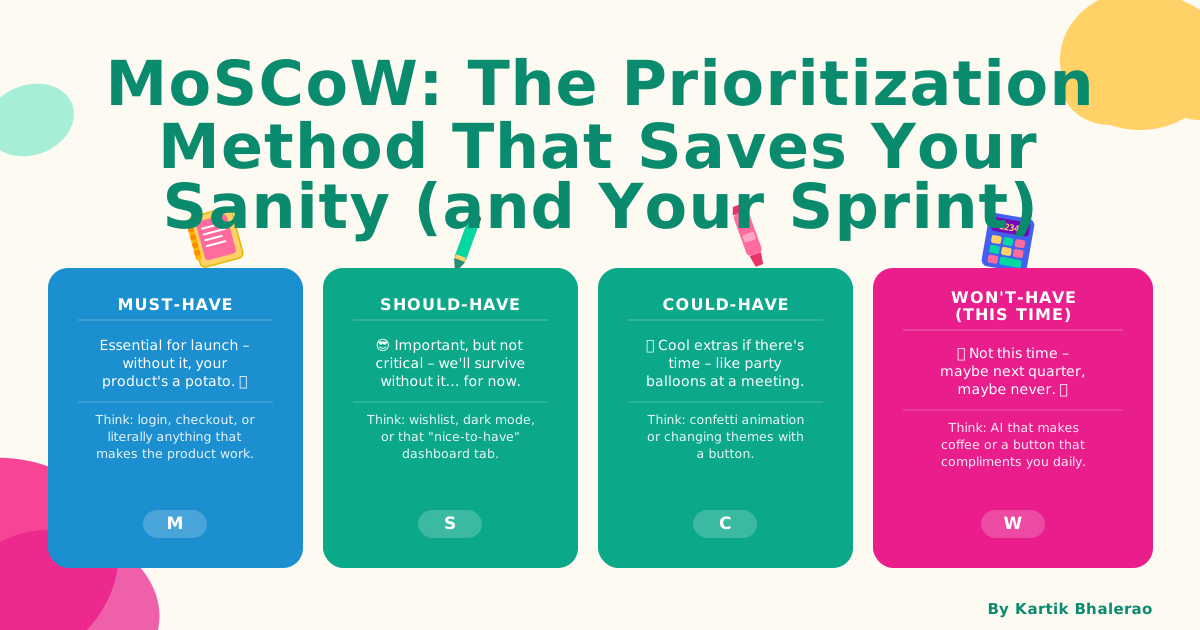
    MoSCoW is a prioritization framework that sorts every requirement into one of four buckets — Must Have, Should Have, Could Have, Won't Have — so a team can agree on what actually ships before the sprint starts, instead of arguing about it mid-sprint.

    As a product manager, it often feels like you're trying to build a rocket ship with IKEA instructions, and everyone's yelling in different languages. Your backlog is bursting, stakeholders have urgent requests, and your deadline was yesterday. Sound familiar? The MoSCoW Method is the simple, battle-tested way to cut through that noise.

    🕰️ A Quick Backstory (No, Not the Russian City)

    The MoSCoW technique was developed in the 1990s by Dai Clegg while working at Oracle. The acronym stands for:

    • M, Must Have
    • S, Should Have
    • C, Could Have
    • W, Won't Have (this time)

    It originated from the DSDM agile framework, a lesser-known cousin of Scrum and Kanban, and has since been widely adopted across tech teams worldwide.

    🔄 Why Product Teams Rely on It

    MoSCoW delivers rapid clarity by:

    • Synchronizing cross-functional teams on what matters most
    • Managing stakeholder expectations realistically
    • Preventing burnout and uncontrolled scope creep

    Think of it like setting ground rules at the beginning of a road trip so you don't end up at six gas stations and one haunted antique store.

    🔍 How MoSCoW Works in Practice

    MoSCoW Rules to Follow

    1. Every requirement must be categorized, No grey areas. Each item belongs in Must, Should, Could, or Won't.
    2. Must-Have items are non-negotiable, If any Must is missing, the release fails.
    3. Limit Must-Haves to 60% or less of total scope, Keep it realistic and focused.
    4. Prioritize collaboratively, Involve stakeholders, product owners, and developers.
    5. Won't-Haves are just as important, They clarify what stays out of scope.
    6. Use it early and often, Apply during planning, refinement, MVP definition, and retrospectives.

    Category Breakdown

    CategoryMeaning
    Must HaveEssential, release cannot proceed without this
    Should HaveValuable but not a blocker
    Could HaveDesirable additions that won't harm if removed
    Won't Have (this time)Deliberately excluded from this cycle

    This gives your team the power to say "no" to requests, guilt-free, with a strategic framework backing you up.

    MoSCoW Cheat Sheet
    MoSCoW Cheat Sheet

    📖 How Development Teams Can Use MoSCoW

    The framework isn't purely theoretical, it's actionable. Teams integrate MoSCoW into:

    1. Sprint Planning & Backlog Grooming, Align the team on what ships in the next cycle
    2. Stakeholder Alignment, Set realistic expectations before commitments are made
    3. MVP Scoping, Define the leanest version of the product that delivers value
    4. Capacity Planning, Match workload to available bandwidth
    5. Retrospectives & Scope Adjustments, Reflect and re-prioritize based on learnings

    ✅ Real-World Example: Food Delivery MVP

    Problem: A startup launching a food delivery app for college students faces tight budget and timeline constraints.

    MoSCoW in Action:

    • Must Have: User registration, restaurant listing, cart & checkout, basic order tracking
    • Should Have: Push notifications, order history, ratings & reviews
    • Could Have: Loyalty points, referral system, dark mode
    • Won't Have (this sprint): Live chat support, AR menu preview, subscription plans

    Food Delivery MVP MoSCoW
    Food Delivery MVP MoSCoW

    Result: The MVP launched on schedule, early feedback was gathered, and the team had energy left to celebrate success.

    ✨ Benefits of MoSCoW

    • Prioritizes deliberately, avoiding reactive decision-making
    • Prevents scope creep and team burnout
    • Creates transparent, understandable roadmaps
    • Establishes stakeholder confidence through realistic commitments

    ⚠️ Watch Out For…

    • Overloading Must-Haves, If everything is critical, nothing is
    • Excluding team members or users, Prioritization must be collaborative
    • Treating it as permanent, Lists should evolve as you learn more

    💡 TL;DR

    "If your backlog looks like a wish list from Santa, MoSCoW is your North Star."

    Keep your product lean, your team focused, and your stakeholders aligned. Don't try to do everything, do the right things.

    🛠️ Templates & Tools

    • Miro MoSCoW Template, Great for real-time collaboration with remote teams
    • Figma Prioritization Boards, Design-integrated planning for product teams

    📖 Read More

    👉 Full Article on Medium

    💬 Have you used MoSCoW in your sprints? Let's connect and share experiences!

    Frequently Asked Questions

    What does MoSCoW stand for?

    Must Have, Should Have, Could Have, and Won't Have (this time). Every requirement gets sorted into exactly one of these four buckets — no grey areas.

    Where did the MoSCoW method come from?

    It was developed in the 1990s by Dai Clegg while working at Oracle, and originated from the DSDM agile framework, a lesser-known cousin of Scrum and Kanban.

    How many items should be Must Haves?

    Keep Must-Haves to 60% or less of total scope. If a Must-Have is missing, the release fails — so overloading the Must category defeats the point of prioritizing at all.

    When should a team use MoSCoW?

    Early and often — during sprint planning and backlog grooming, stakeholder alignment, MVP scoping, capacity planning, and retrospectives, not just once at project kickoff.

    Similar Topics

    Strategy

    AI-First Product Strategy: How to Build with Intelligence at the Core

    12 min readJun 20, 2024
    Strategy

    From Idea to MVP: A Product Manager's Journey

    10 min readMay 28, 2024
    AI

    Prompt vs. Context vs. Harness Engineering: The Difference That Actually Matters

    9 min readSep 30, 2026